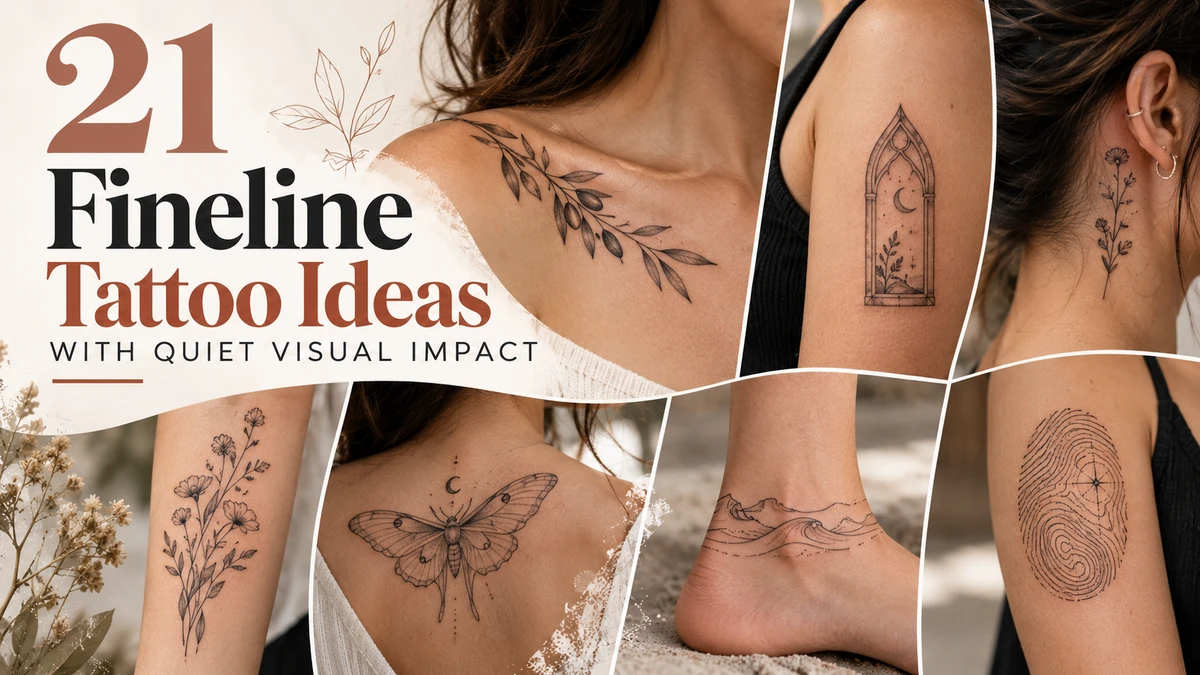
21 Fineline Tattoo Ideas With Quiet Visual Impact
Fineline tattoos make their impression through precision rather than visual weight. A single stem can follow the forearm like a pencil mark; a miniature landscape can turn the ankle into a horizon. The strongest fineline tattoo ideas are not simply conventional designs made smaller. They use open space, restrained shading, and carefully judged scale so the image remains readable on living, moving skin.
This collection ranges from botanical and animal subjects to abstract, architectural, and personal designs. It includes discreet wrist and ear placements, elongated pieces for the ribs and spine, and larger compositions with room to age. Use these ideas as starting points for a custom design—not artwork to copy line for line.
1. Pressed Wildflower Herbarium
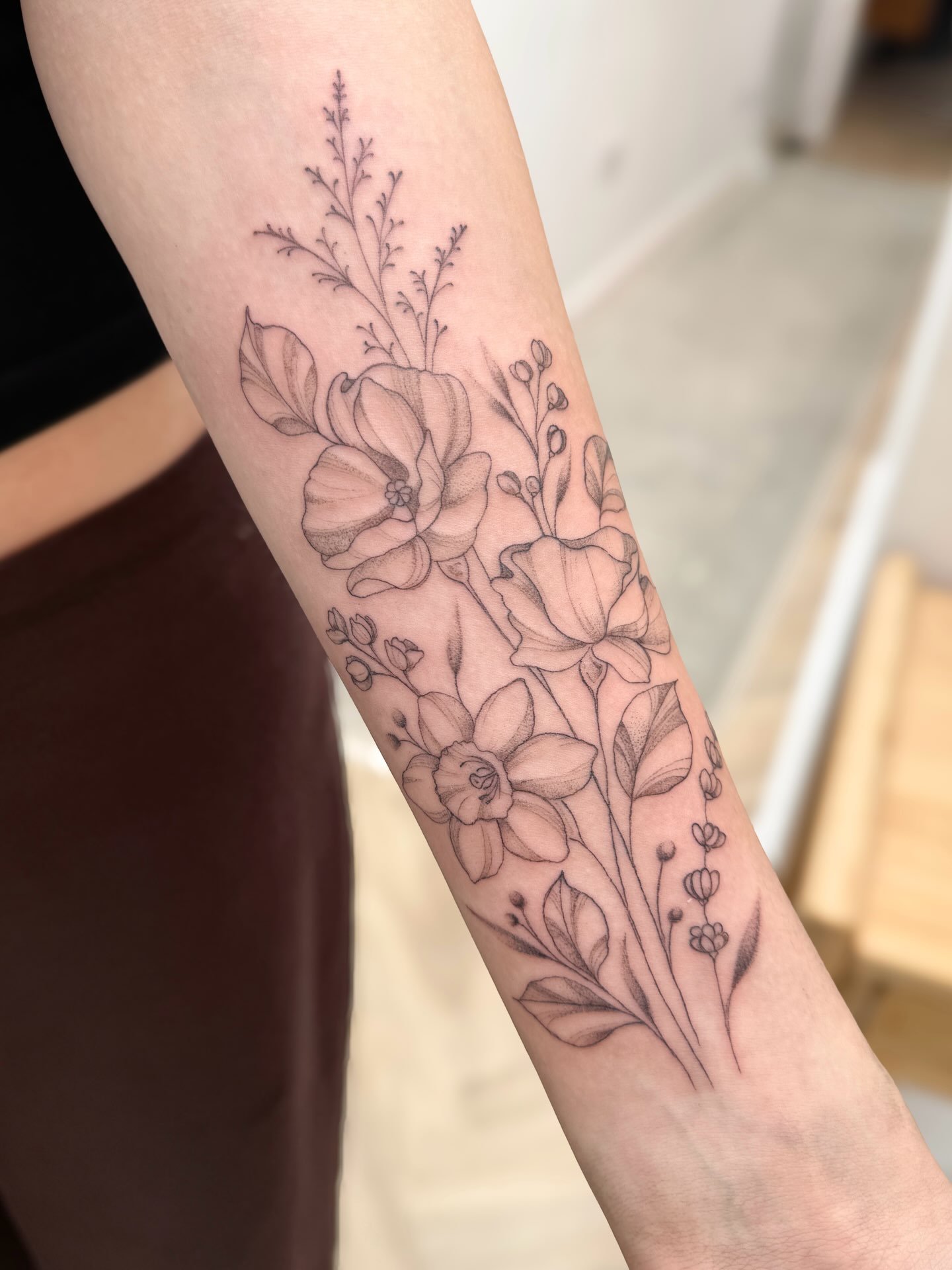
A vertical arrangement of wildflowers can run along the forearm, measuring roughly five inches from stem to petal. Fine black outlines, sparse stippling, and generous gaps between overlapping leaves create the appearance of a botanical specimen without making the flowers clinically symmetrical. The stems should bend slightly with the forearm rather than forming a rigid central line.
This composition offers more breathing room than a miniature bouquet, which helps preserve its structure as the lines soften. Choose plants connected to a place, season, or memory, or simply select species whose silhouettes work well together. Ask the artist to simplify dense flower centers and show healed examples of comparable fine-line botanical tattoos.
2. Crescent Moth at the Shoulder
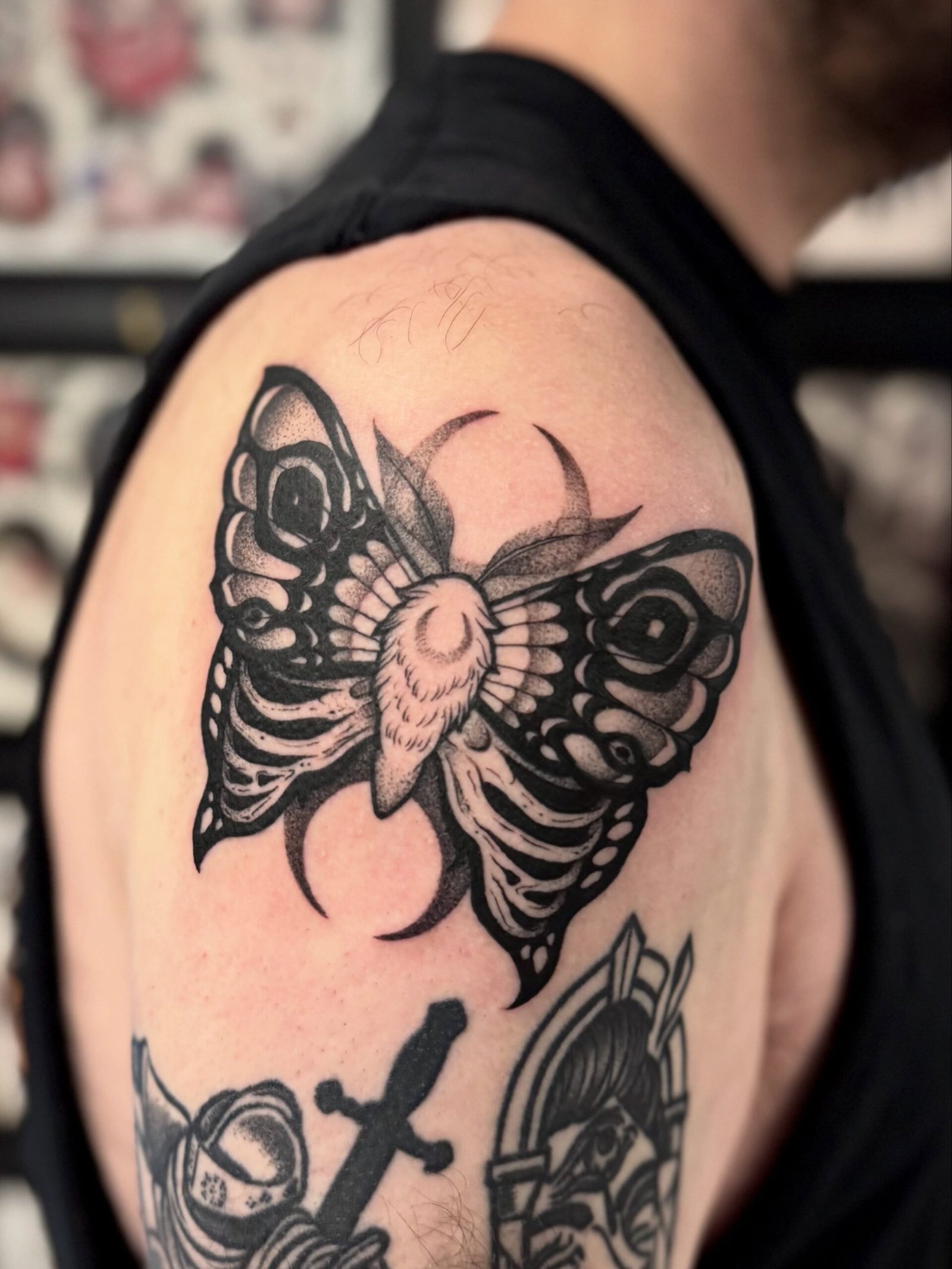
Instead of a perfectly mirrored insect, this design gives a small moth one slightly lifted wing, as though it has just landed near the front of the shoulder. At about three inches wide, it can include thin wing contours, restrained dotwork, and a small crescent formed by untouched skin within the chest. The upper curve echoes the shoulder cap without wrapping too far toward the chest.
The asymmetry keeps the tattoo lively and distinguishes it from decorative butterfly flash. A moth may suggest nocturnal curiosity or change, but it can also be chosen simply for its shape. Leave enough space between the antennae, legs, and wing markings; compressing naturalistic detail into a tiny design can turn an elegant subject into an indistinct patch.
3. Single-Line Tidal Map
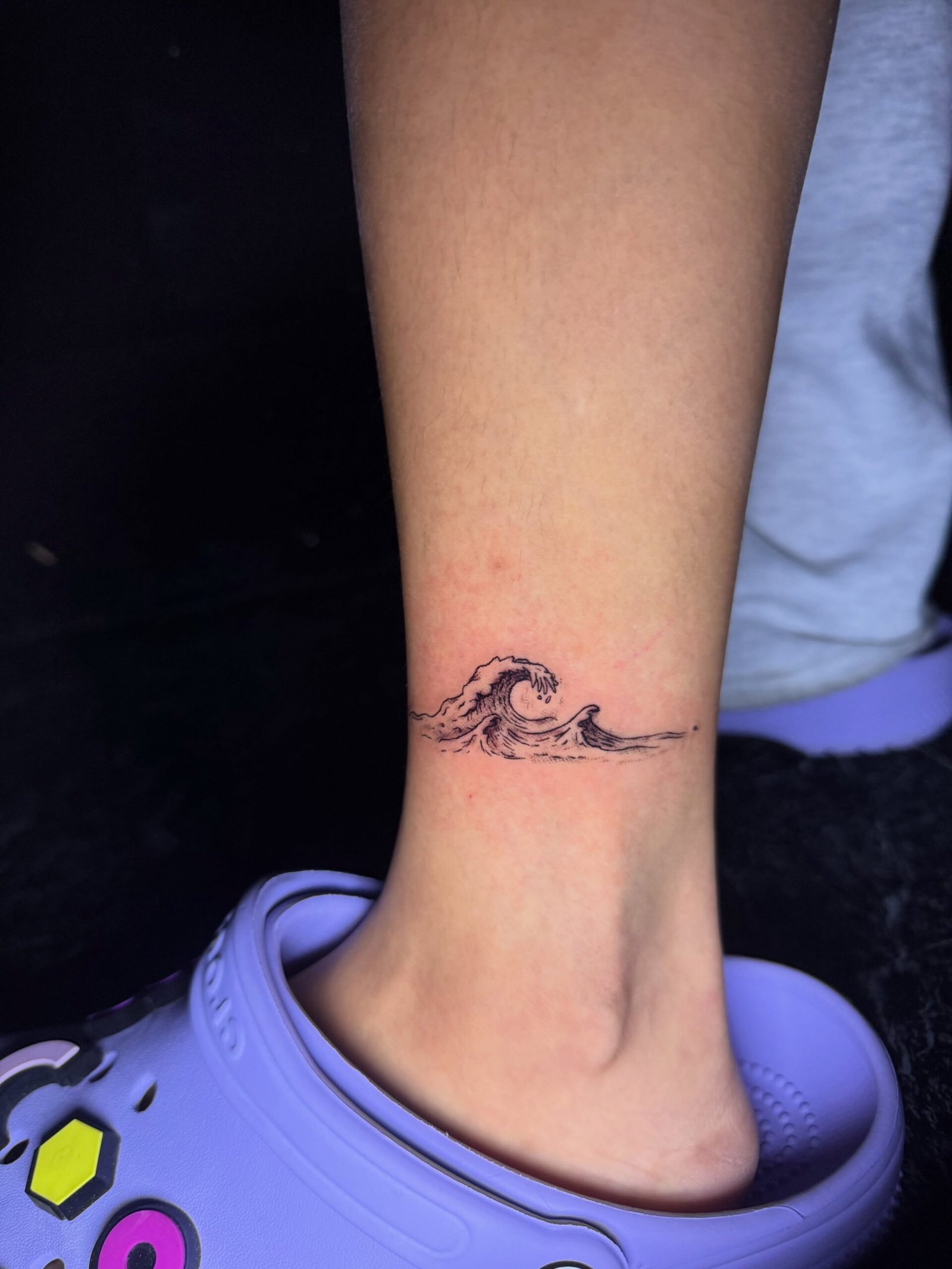
A slim wave composition can travel around the ankle, extending three to four inches without closing into a full anklet. One continuous-looking contour forms the coast, while two separate hairline curves suggest receding water. The artist can vary the line weight slightly at bends and leave clean breaks where the water meets the shore.
This is quieter than a literal beach scene and works particularly well for someone who wants a travel reference without coordinates or lettering. The ankle introduces movement, footwear friction, and a curved viewing angle, so a stencil should be checked while standing as well as seated. Avoid packing tiny birds, boats, or shells into the same narrow strip.
4. Miniature Window and Moon
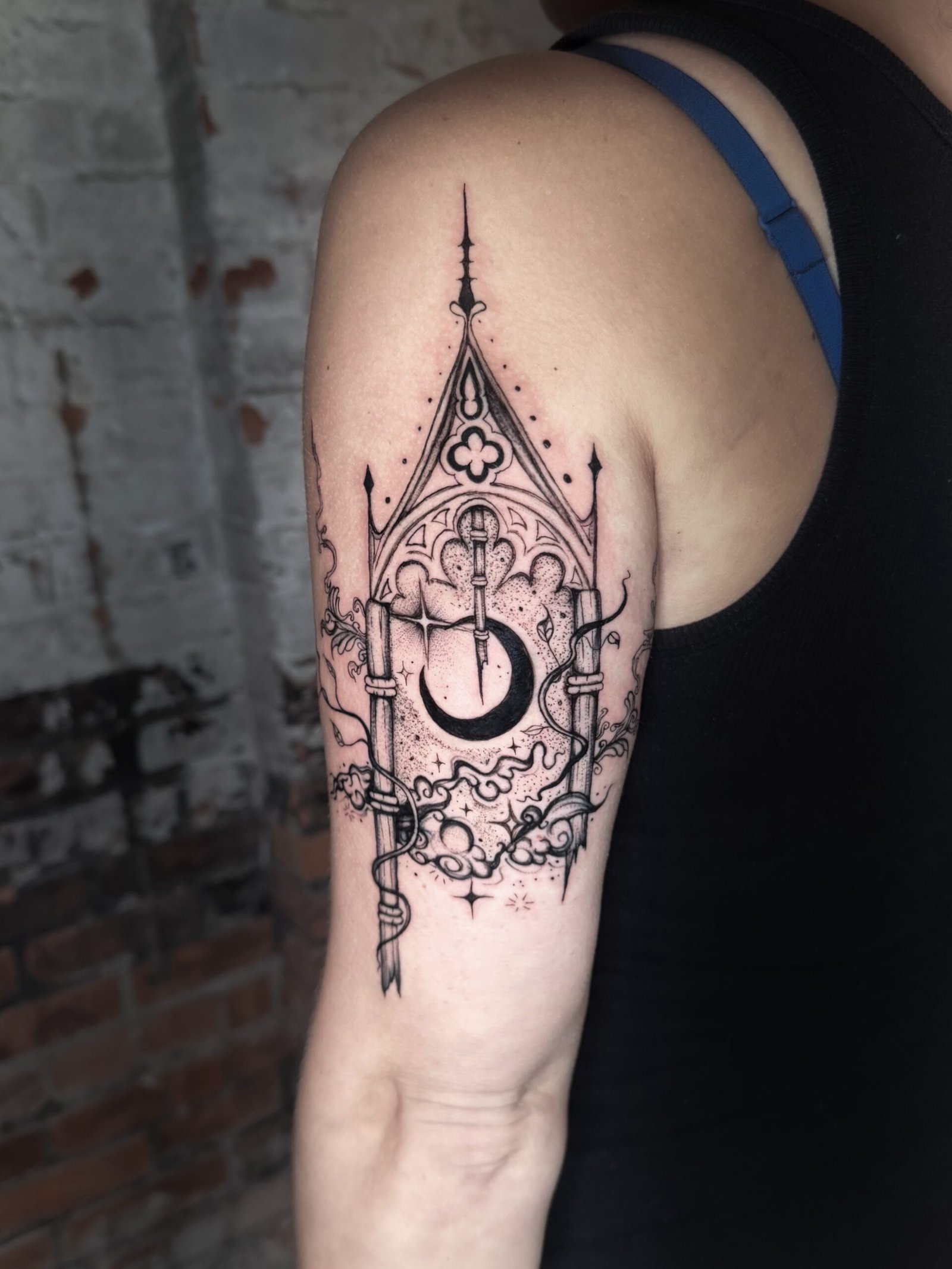
A tall, pointed gothic window on the upper arm frames a crescent moon. At around three inches tall, the architecture should remain simple: a clean outer arch, a single sill, and open sky rather than miniature masonry. Pale grey stippling beneath the moon can create depth without filling the entire window.
The design feels like a small view rather than a freestanding celestial symbol. Its vertical proportions suit the triceps, where it remains visible from behind but does not dominate the arm from the front. Request a mock-up at several sizes; if the stars and window border begin competing, enlarge the design or remove details instead of making every element finer.
5. Olive Branch Collarbone Sweep
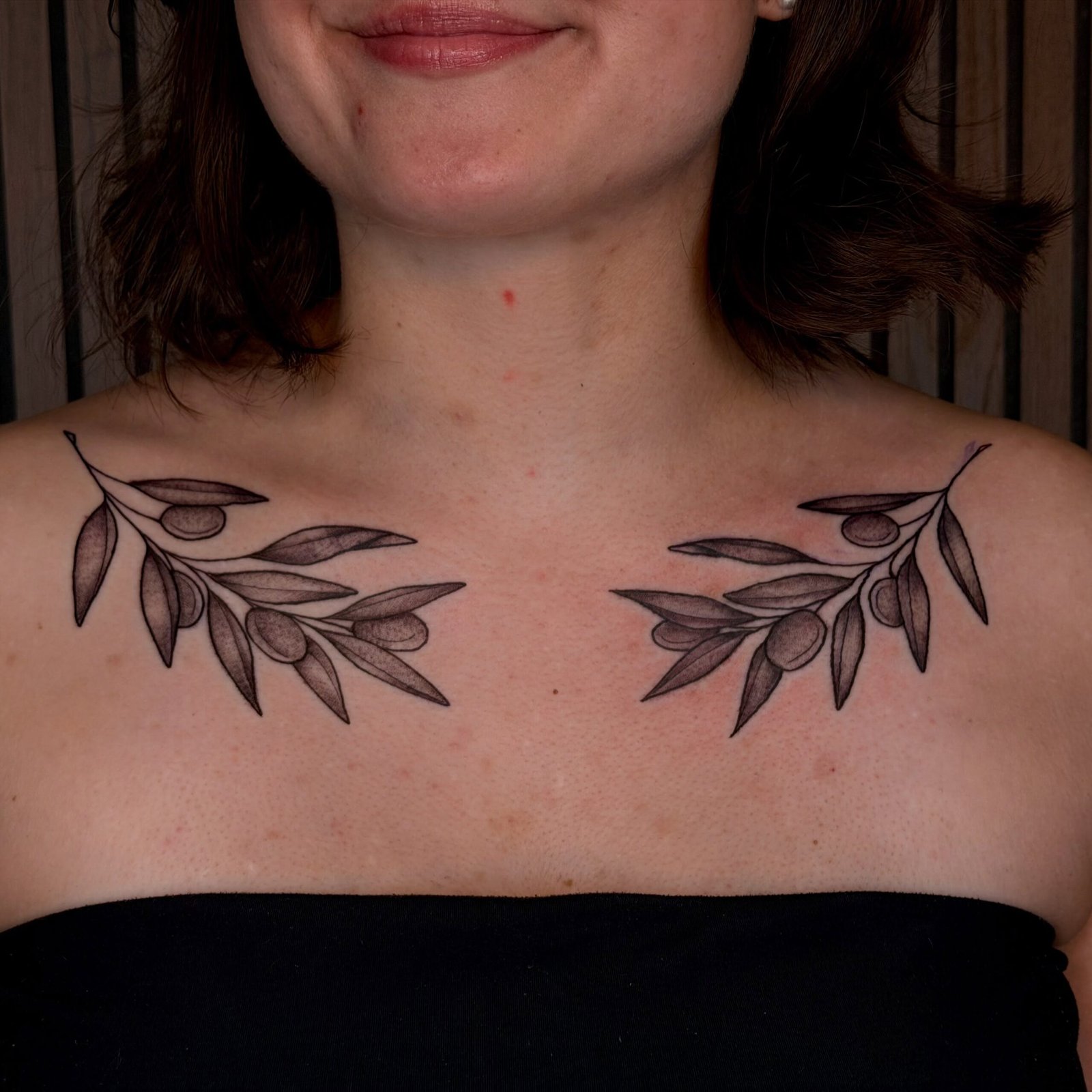
One slender olive branch can begin near the shoulder and angle inward beneath the collarbone, measuring about five inches. Alternating leaves prevent the design from becoming a repetitive chain, while a few open olives provide darker focal points. Use crisp black contours, minimal grey wash, and noticeably wider gaps near the center where the skin curves most sharply.
The collarbone gives an elongated botanical design a natural guide, but the final angle should be set against the wearer’s anatomy rather than copied from a flat reference. Necklines and bag straps may cover parts of the branch, so test the placement with typical clothing. Olive branches have long associations with peace in Mediterranean traditions, although personal meaning need not be fixed or ceremonial.
6. Topographic Fingerprint
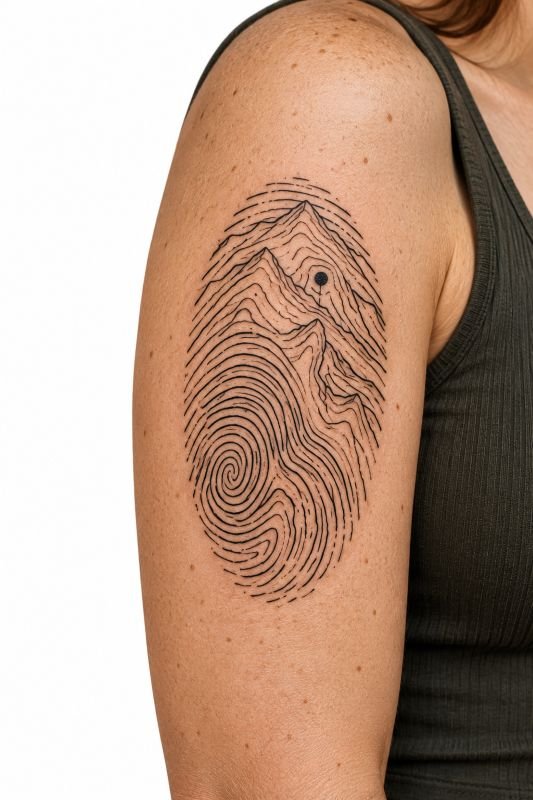
This oval design combines the broad flow of a fingerprint with the irregular contours of a topographic map. Placed on the outer upper arm at roughly four inches tall, its concentric lines should be selectively interrupted rather than packed edge to edge. A single small dot can mark a personally significant place without adding coordinates or readable text.
The concept works because both fingerprints and maps describe identity through lines, yet the result remains abstract. It also needs more room than its premise might suggest: tightly stacked contours can visually merge as the tattoo settles. Ask the artist to redraw the line spacing for the chosen size and to avoid reproducing an actual fingerprint unless that personal biometric detail has been intentionally provided.
7. Sleeping Fox Contour
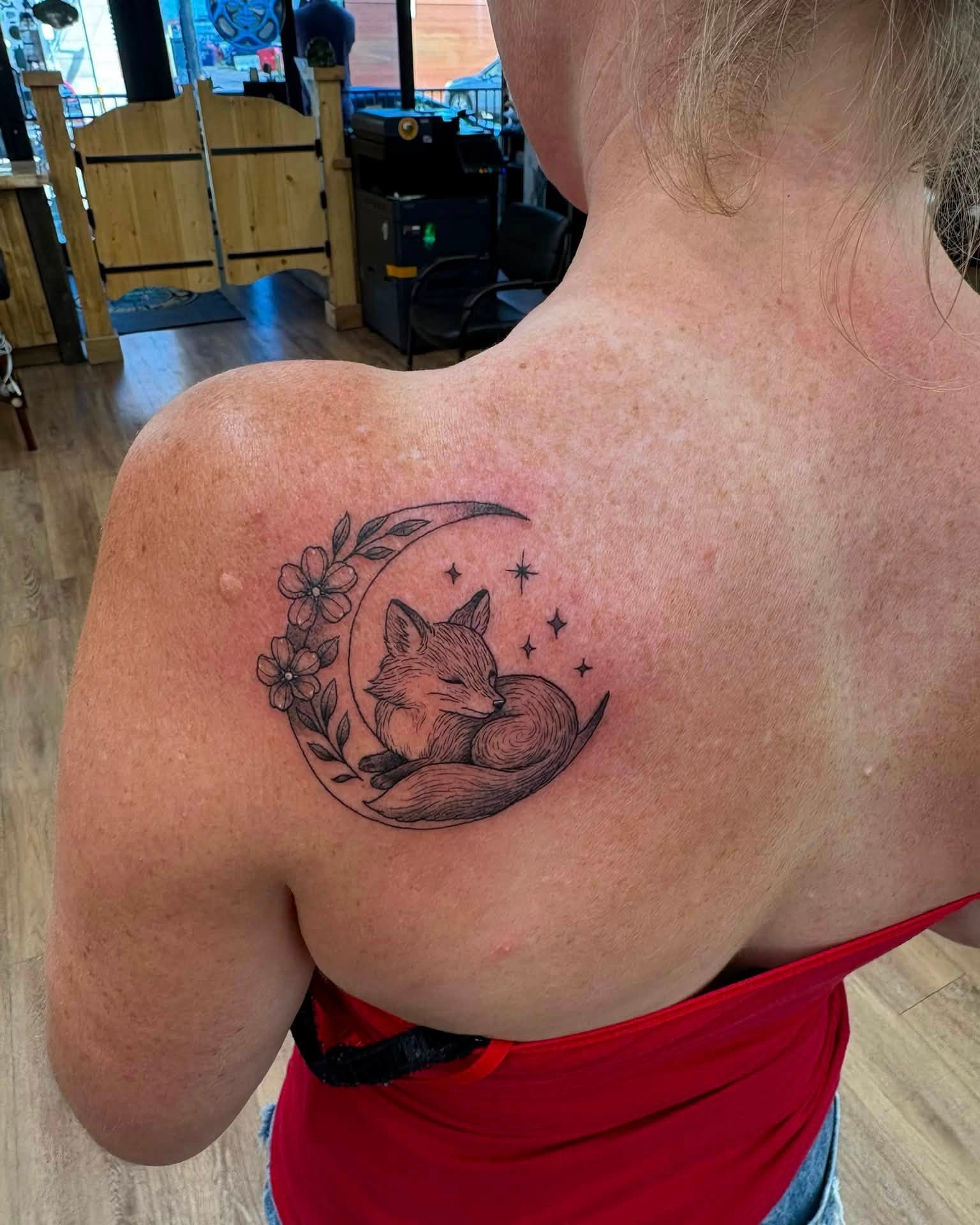
A curled fox can fit neatly on the shoulder blade, its tail forming an incomplete circle around the body. At four inches wide, the piece has enough space for a pointed ear, folded paws, and a slim facial profile without resorting to microrealistic fur. Warm black linework and a few rust-brown accents along the tail give it softness while retaining open skin.
The circular posture creates a calm focal point that moves subtly with the shoulder. If color is used, it should support the silhouette rather than fill every section like an illustration. Ask for a version with wider negative-space breaks at the face and paws, where several short lines converge. An artist experienced with animals can reduce the anatomy without losing the unmistakable fox shape.
8. Orbiting Birthstones
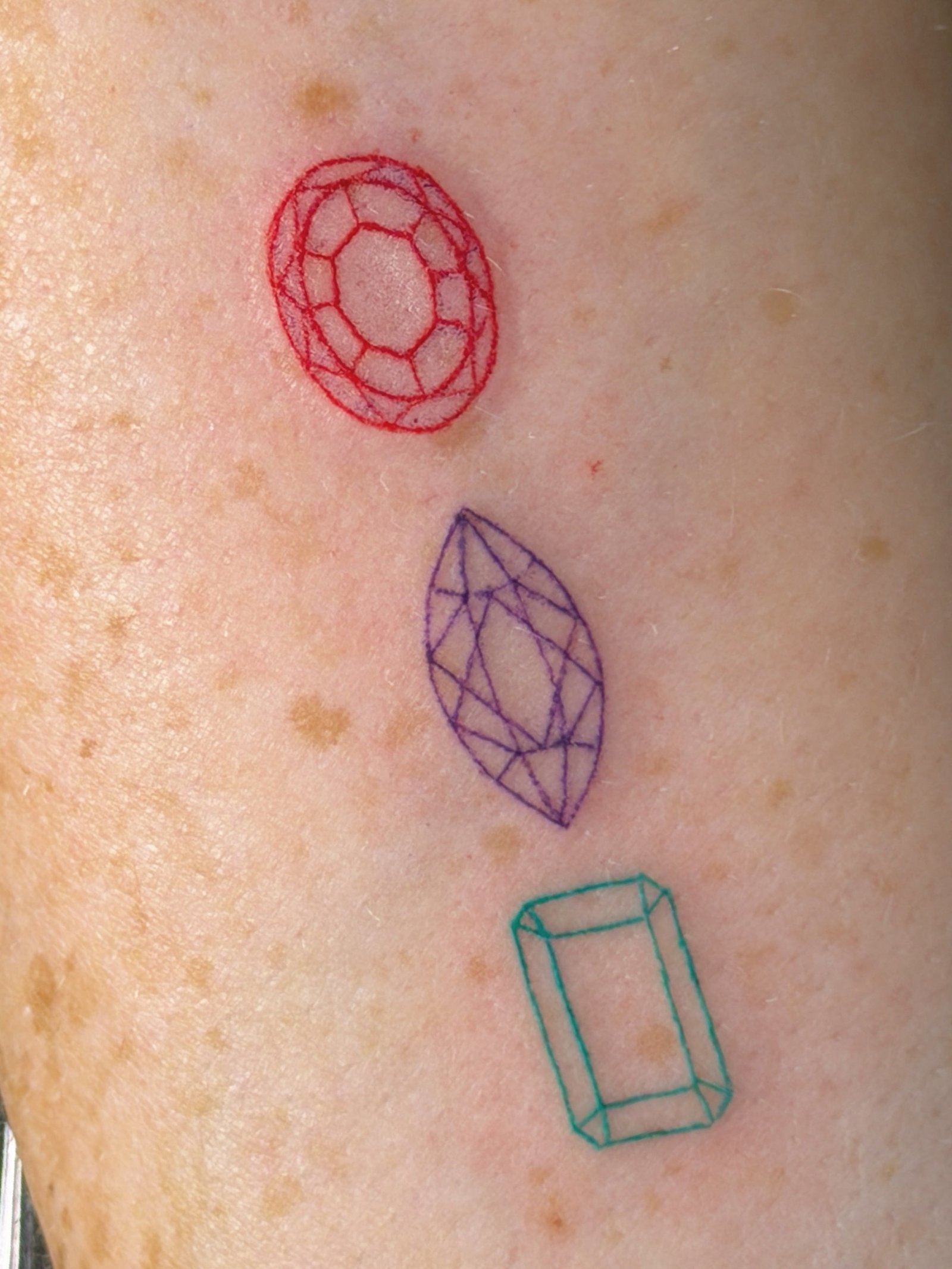
Three small gemstone outlines can follow a vertical line, connected by a thin arc and two offset dots. Each stone is about half an inch wide, but the overall composition spans four inches. Rather than attempting literal jewel realism, use distinctive cuts, black outlines, and restrained muted color—perhaps smoky blue, garnet, and pale green—surrounded by untouched skin.
This design can represent family members, milestones, or favorite colors without relying on names or dates. It is more adaptable than a conventional birthstone row because stones can be added without forcing perfect symmetry. Discuss pigment choices on the wearer’s skin tone and ask to see healed color work; delicate color accents must still provide enough contrast to remain intentional.
9. Anatomical Heart With Garden Shoots
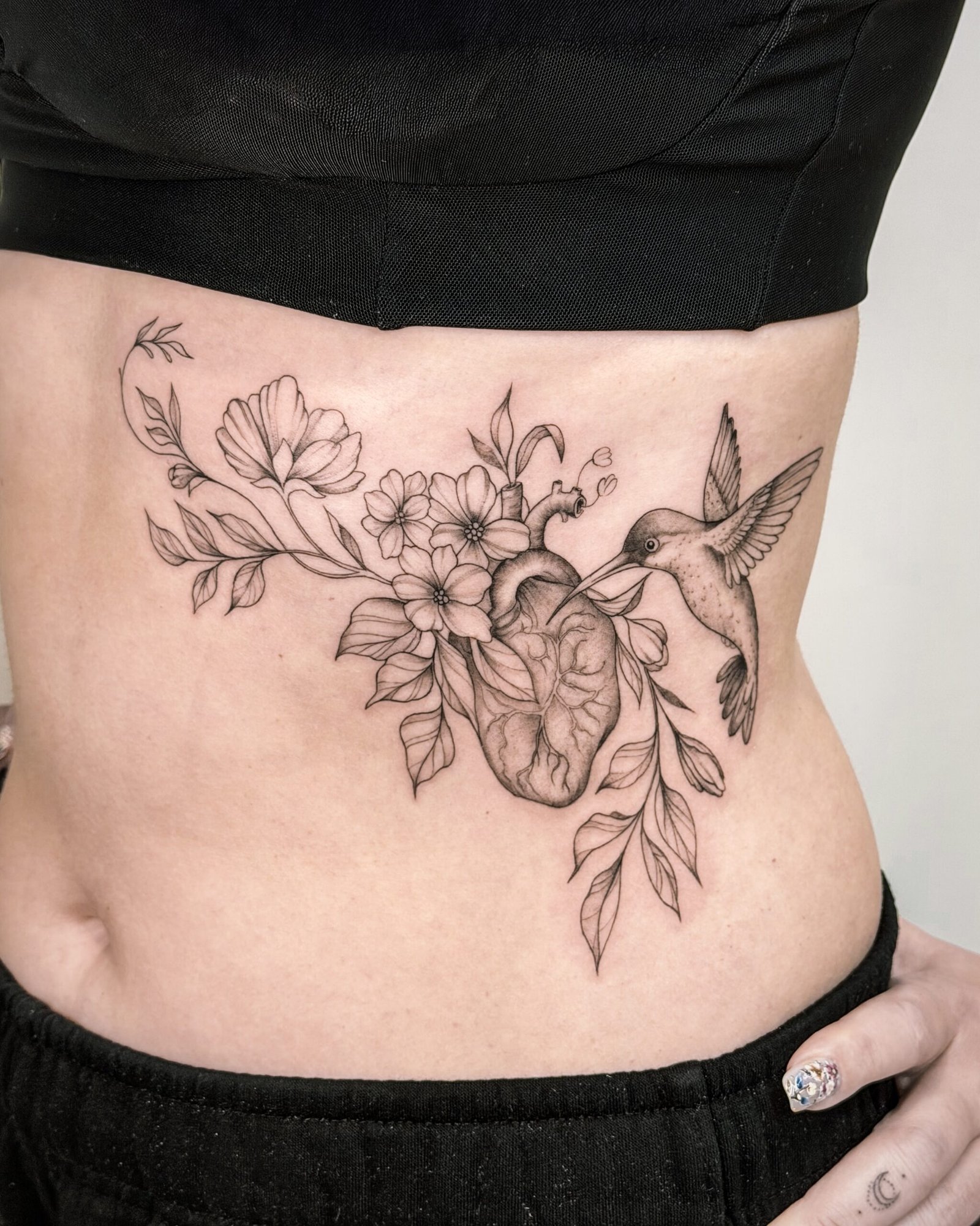
A simplified anatomical heart can sit on the side of the ribcage, with florals and a hummingbird emerging from its upper vessels. At five inches tall, it has room for recognizable chambers and vessels without dense medical detail. Fine black outlines, a pale grey shadow, and leaf shapes made largely from negative space keep the piece light despite the substantial subject.
The contrast between muscular anatomy and new growth gives the image emotional range without imposing one meaning. The ribs move with breathing, so the artist should assess the stencil in a neutral standing posture and simplify any detail that distorts at rest. This is best handled by someone whose portfolio shows both accurate organic anatomy and healed fine-line shading, not only tiny ornamental work.
10. Rain Cloud With Broken Horizon
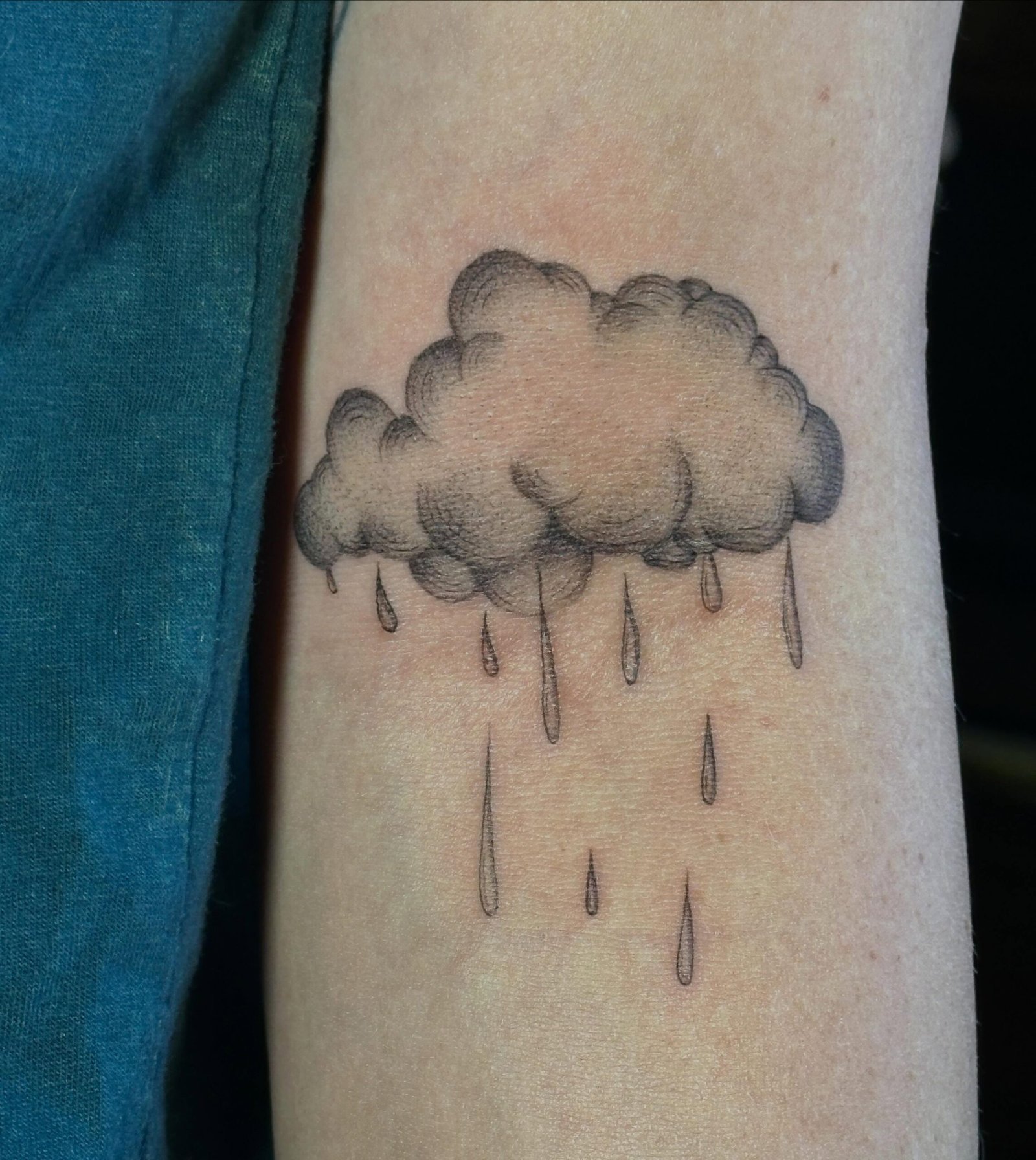
A small cloud positioned above the inner wrist releases three uneven rain lines that stop before reaching a thin horizon below. The complete design measures about two and a half inches vertically. Fine black contours define the cloud, while a soft wash of grey stays concentrated along its lower edge. The blank interval between rain and horizon is the design’s central feature.
That open gap prevents the concept from becoming a conventional weather icon and gives the wrist room to remain visually uncluttered. Because bracelets, watches, and frequent movement can compete with the tattoo, test its height with everyday accessories. The symbolism can remain open: pause, distance, weather passing, or nothing beyond an appreciation for spare graphic composition.
11. Crane in Mid-Step
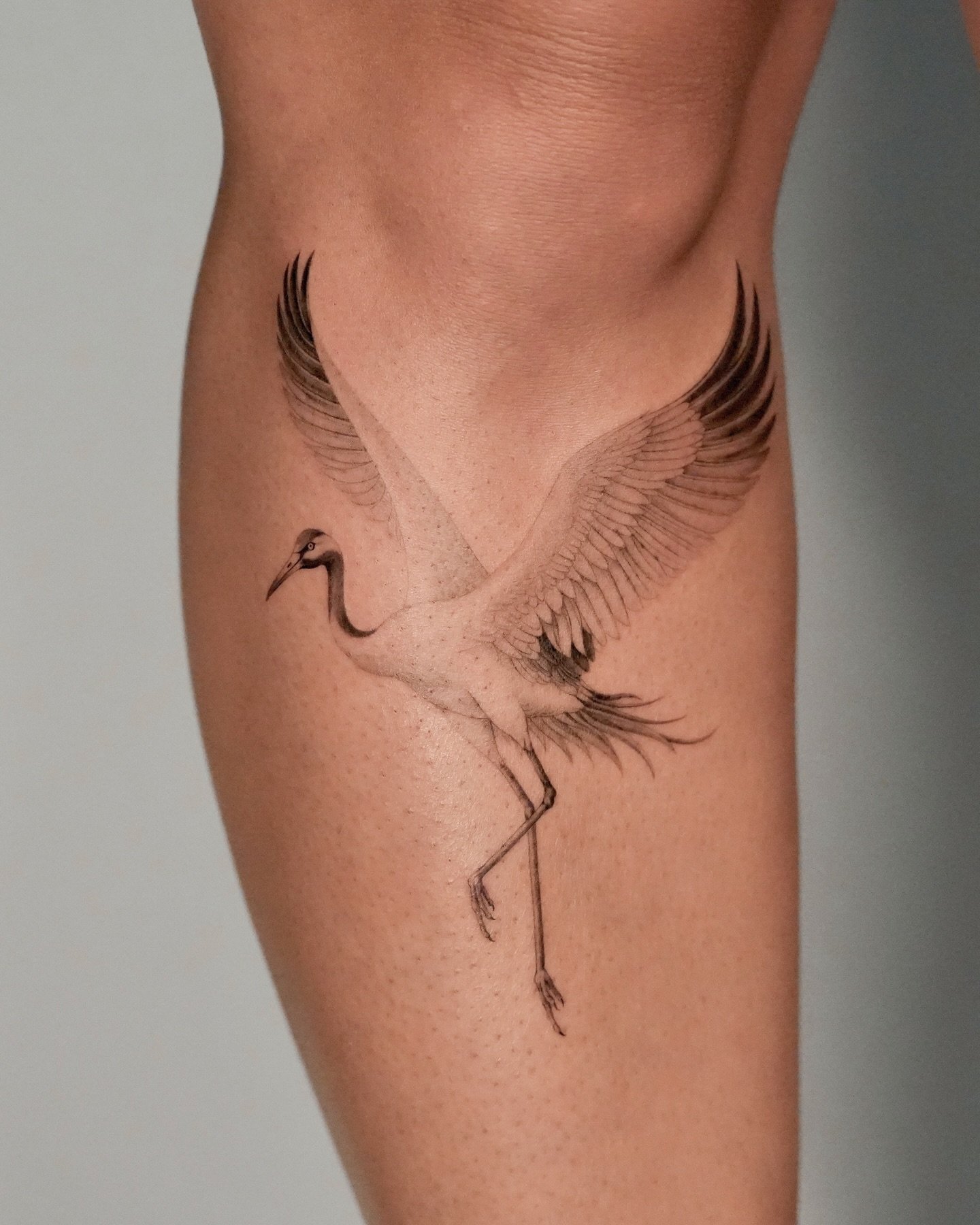
A fine-line crane with raised wings creates a vertical calf tattoo with more movement than a static bird profile. At approximately seven inches tall, the design uses long leg lines, an open wing contour, and sparse black-and-grey feather marks. The reeds can extend beyond the bird without enclosing it, allowing the surrounding skin to function as water and sky.
The calf supplies enough length for the crane’s proportions, which would be difficult to preserve at miniature scale. Cranes carry different meanings across cultures, so avoid presenting one interpretation as universal or borrowing a culturally specific artistic composition without context. An original natural-history direction, developed from legitimate bird references, keeps the piece respectful and visually distinctive.
12. Abstract Profile and Eclipse
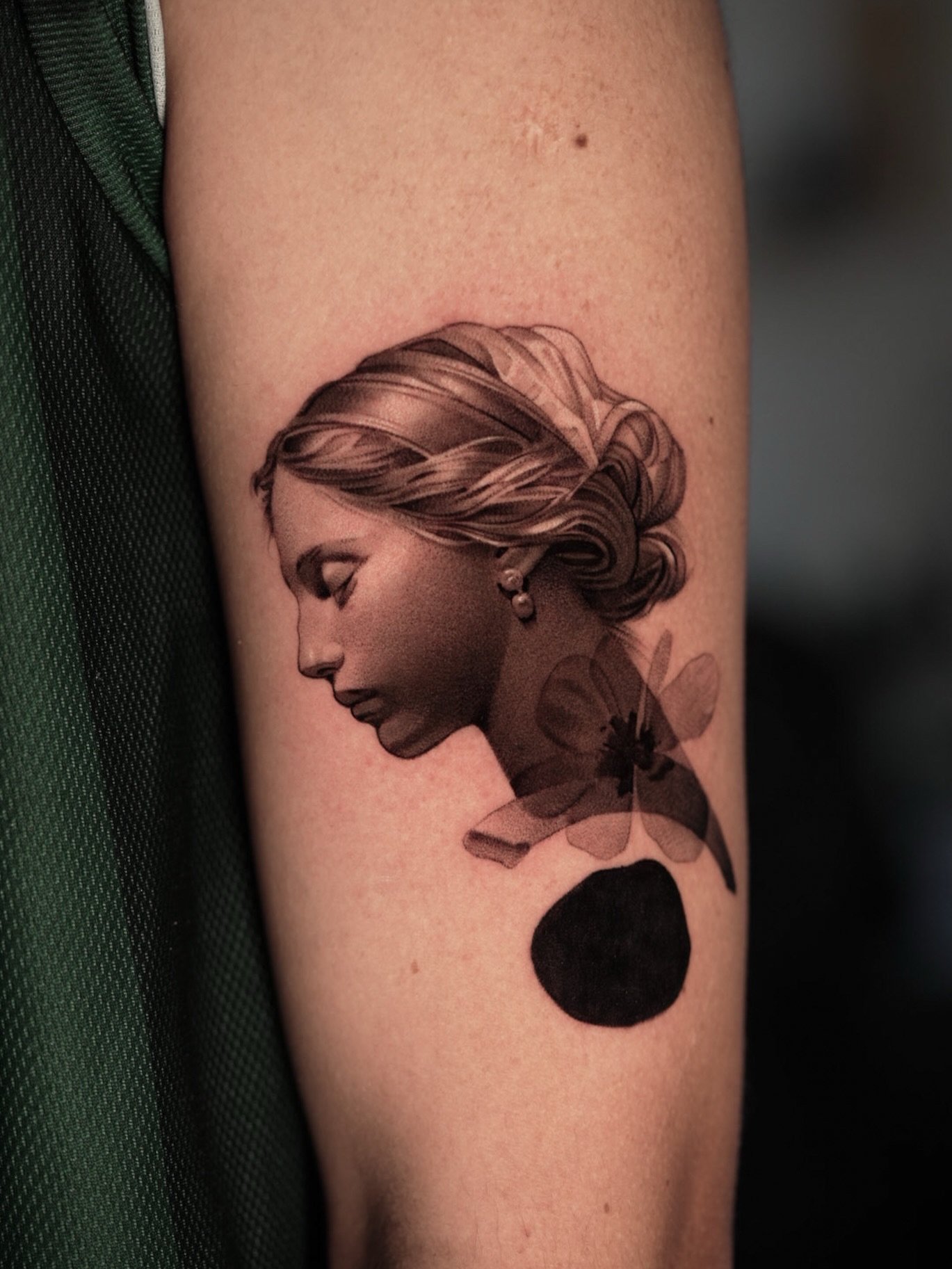
One continuous contour can suggest a face in profile before curving into a dark eclipse above the brow. Positioned behind the upper arm, this four-inch vertical design uses a slightly heavier black circle as its focal point, balanced by an extremely spare facial line and one offset dot. The circle should remain separated from the contour rather than touching it.
This is a useful option for readers drawn to portrait imagery but uninterested in literal likenesses. The design depends on the exact relationship between line and empty skin, so a generic internet stencil will rarely fit well. Ask the artist to sketch several profiles and adjust the curve against the arm. A small increase in size can make the difference between intentional abstraction and an unreadable squiggle.
13. Tiny Match and Wild Spark
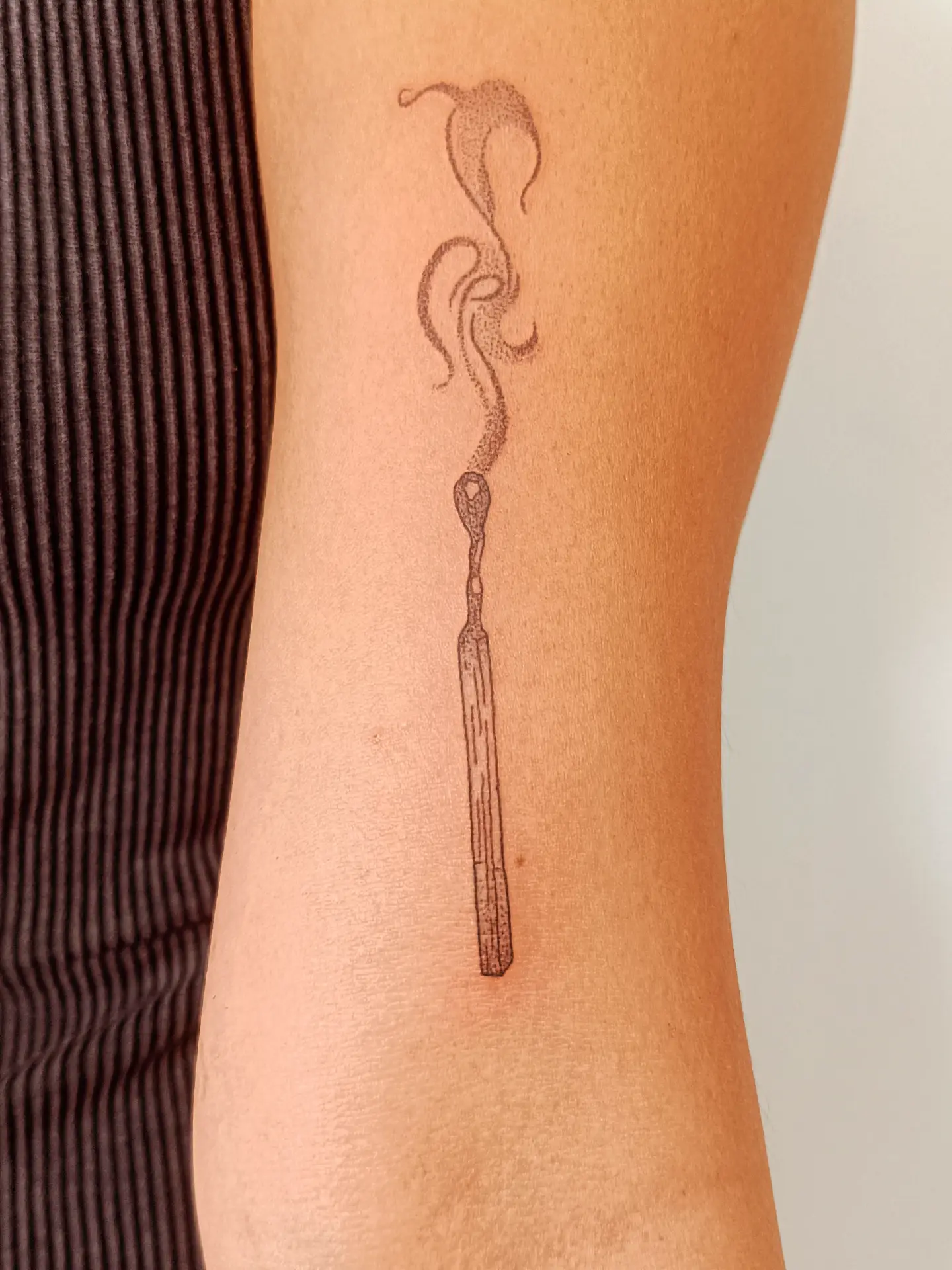
A single spent match lies diagonally along the outer forearm, with one detached spark floating above its charred tip. The design spans about three inches and uses black linework, a short section of textured stippling, and one muted amber accent. Keeping the spark separate avoids turning the image into a cartoon flame and gives the tiny composition a precise focal point.
The match can refer to an ending, an idea, or simply the graphic tension between a straight stem and irregular burned wood. It also leaves ample open space for future patchwork tattoos. Preserve that flexibility by checking the placement against the entire arm rather than treating the available skin as an isolated rectangle. The tip needs enough tonal contrast to look deliberately charred after healing.
14. Mountain Pass in an Open Circle
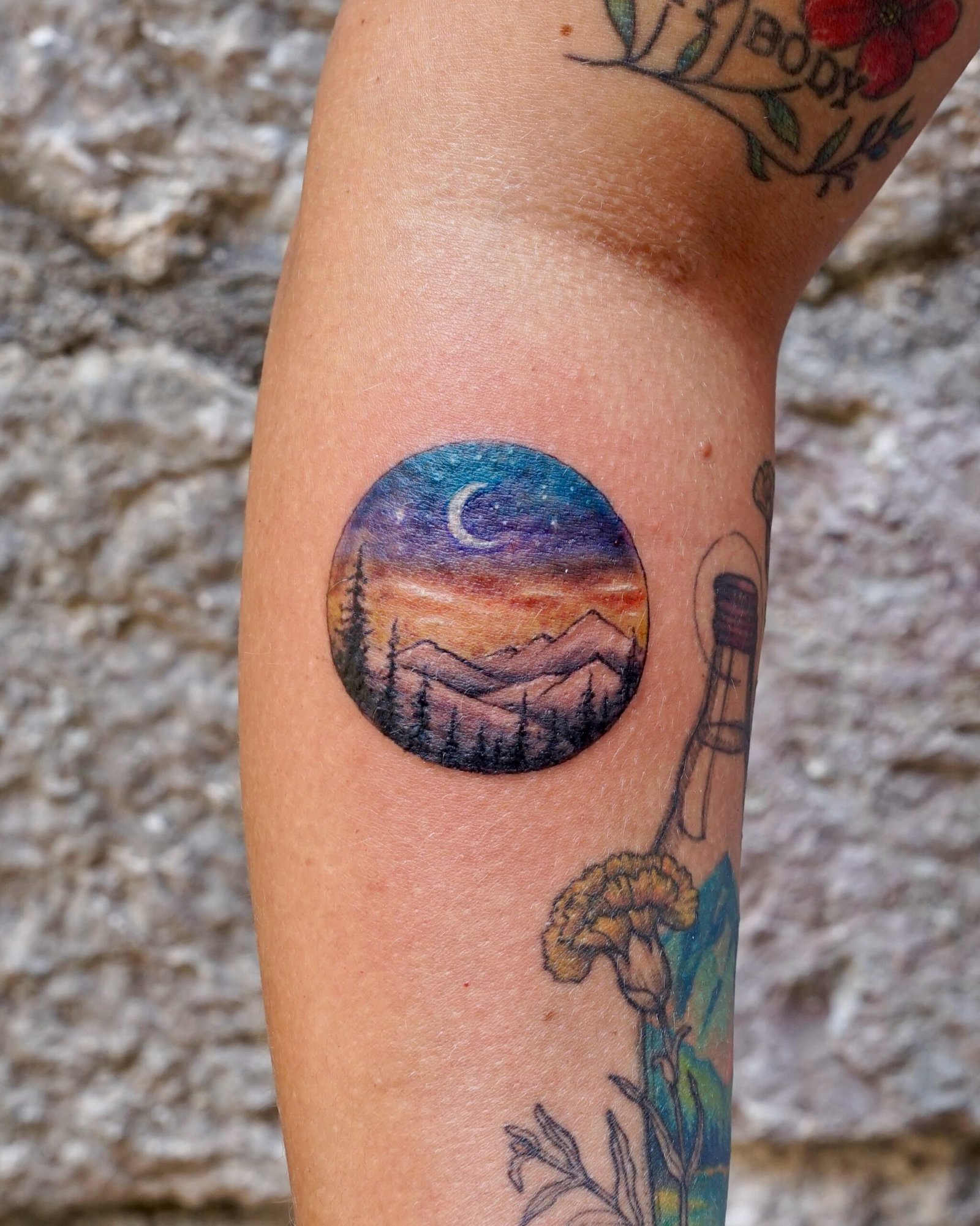
A four-inch open circle on the upper thigh contains only the essential lines of a mountain pass: two overlapping ridges, a low trail, and a small negative-space sun. The circle breaks where the trail exits, preventing a landscape from feeling sealed inside a badge. Fine black contours and a modest gradient of grey stippling separate foreground from distance.
The thigh allows more space than the wrist or ankle, making subtle depth possible without reducing every ridge to a hairline. It can remain a standalone piece or become an anchor for a future nature-based collection. Bring landscape photographs for atmosphere, but let the artist build a new arrangement rather than tracing a famous image or another tattooer’s custom work.
15. Fine-Line Pet Ear Portrait
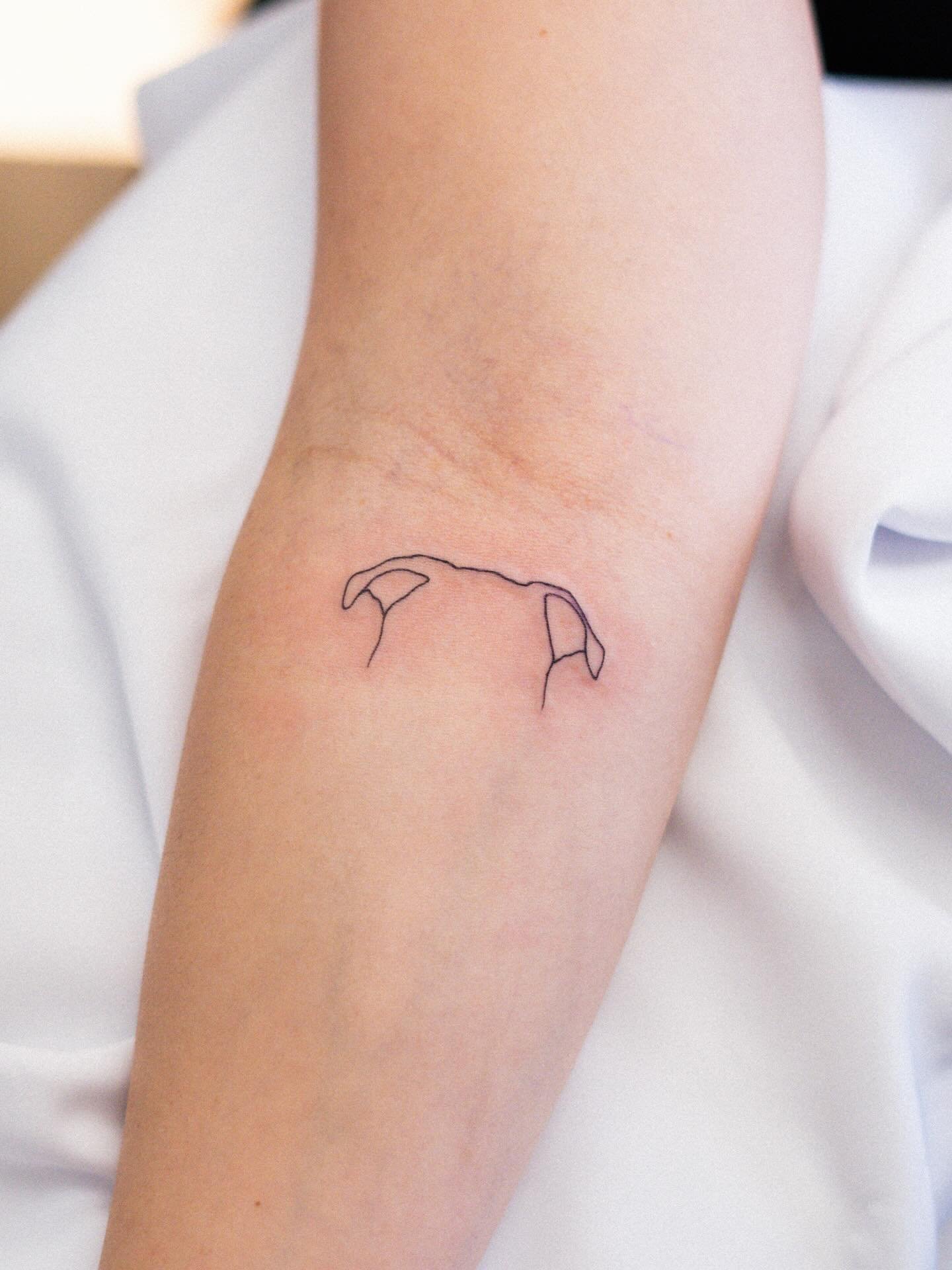
Rather than compressing an entire pet portrait into an inch, this design focuses on a recognizable head silhouette and the individual angle of the ears. Placed over the inner bicep at three to four inches wide, it uses a clean outer contour, a few directional fur marks, and one darker feature—usually the nose or eyes—to establish expression.
Good references matter more than decorative additions. Supply several clear photographs showing the animal from consistent angles, including one that captures the characteristic ear shape. A specialist can identify which details create likeness and discard the rest. Names, dates, paw prints, and flowers are optional, but combining all of them in one small space usually weakens the portrait and reduces long-term clarity.
16. Spiral Shell Study
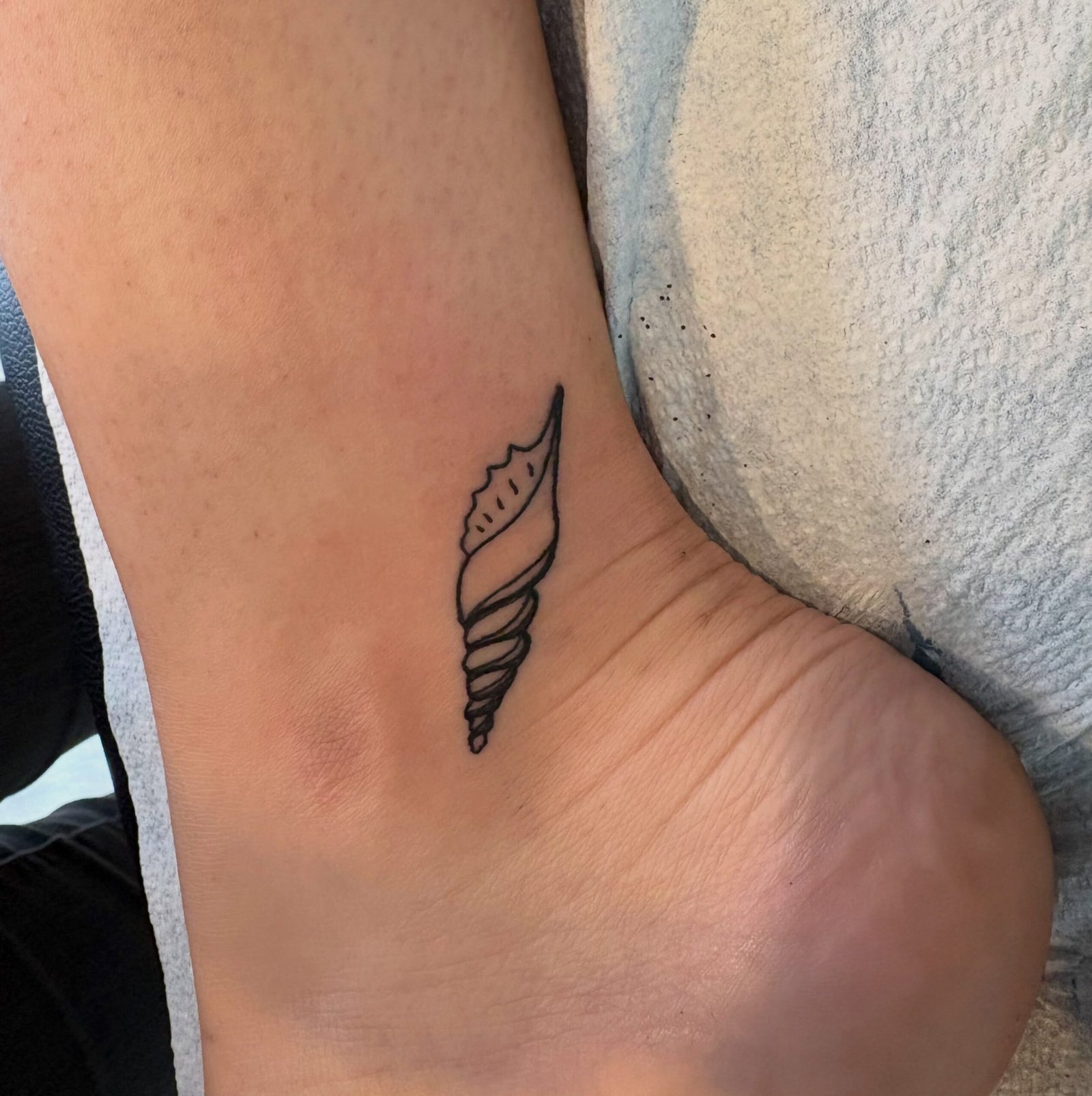
A small shell rendered like a natural-history sketch can sit behind the ankle, measuring roughly three inches tall. The exterior contour remains crisp while curved interior ridges taper and stop before reaching the center. A few sandy-grey dots create texture along one edge, with the rest of the shell left open to prevent the spiral from becoming congested.
The rear ankle makes the shell visible in motion but understated when viewed from the front. It can reference the coast without relying on obvious waves, palms, or coordinates. Since socks and shoes regularly cross this area, discuss placement in relation to typical footwear and follow the artist’s healing instructions carefully. If the interior ridges cannot be spaced comfortably, the design needs to be larger.
17. Suspended Paper Boat
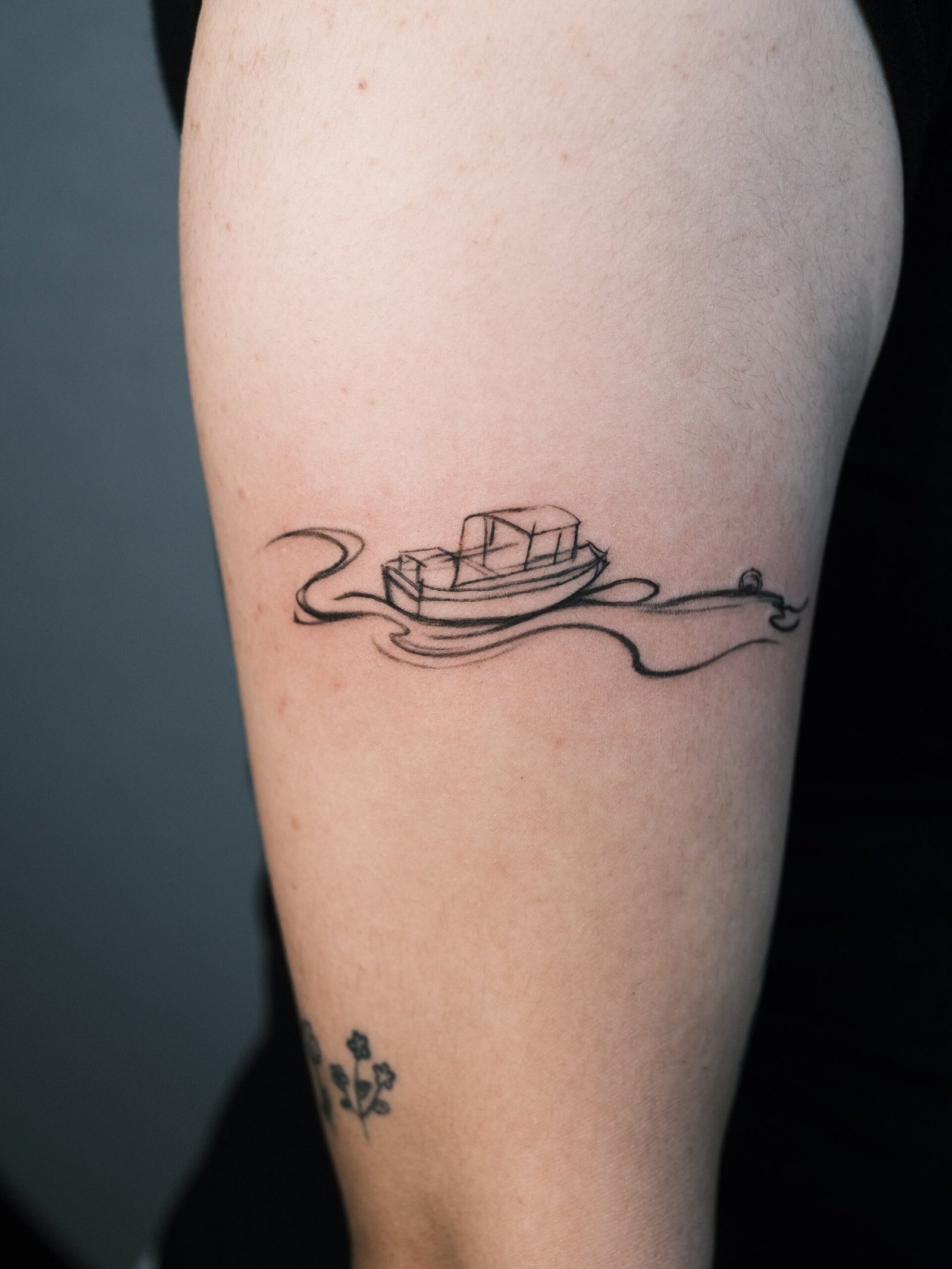
A tiny paper boat appears to float above a curved line rather than directly on it, creating a narrow band of negative space that suggests reflection. The four-inch design sits horizontally on the forearm, with thin black fold lines, a pale blue-grey water curve, and one small dot offset like a distant star. Its geometry should be clear without looking ruler-perfect.
The gap between boat and water gives this familiar motif a more contemplative composition. It could recall childhood, travel, uncertainty, or simply a love of folded forms. Keep the interior folds limited to the lines required to identify the object; excessive origami detail is unlikely to improve a tattoo at this scale. Check that the design remains level when the arm rests naturally.
18. Fern Frond Along the Spine
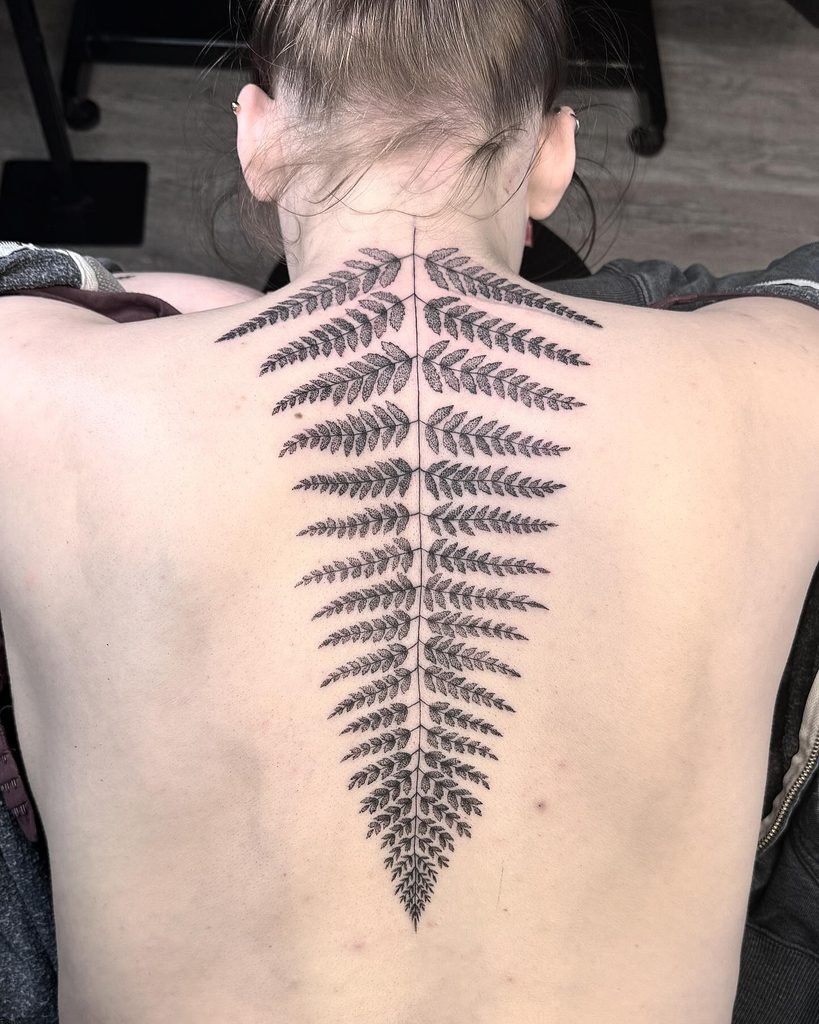
A single fern frond can descend from the upper back for seven to nine inches, curving gently away from the exact spinal column. Alternating leaflets become slightly smaller toward the tip, while occasional omissions keep the pattern organic. Fine black outlines and a narrow grey wash at the stem provide enough contrast without turning the plant into a solid decorative stripe.
This is one of the larger fineline tattoo ideas in the collection, and that scale is an advantage. The leaflets have room to remain distinct, while the full composition can be seen from across a room. Ask the artist to position the stencil with the shoulders relaxed and examine how it shifts during movement. An open-back neckline frames it; ordinary shirts can conceal it completely.
19. Architectural Stair Shadow
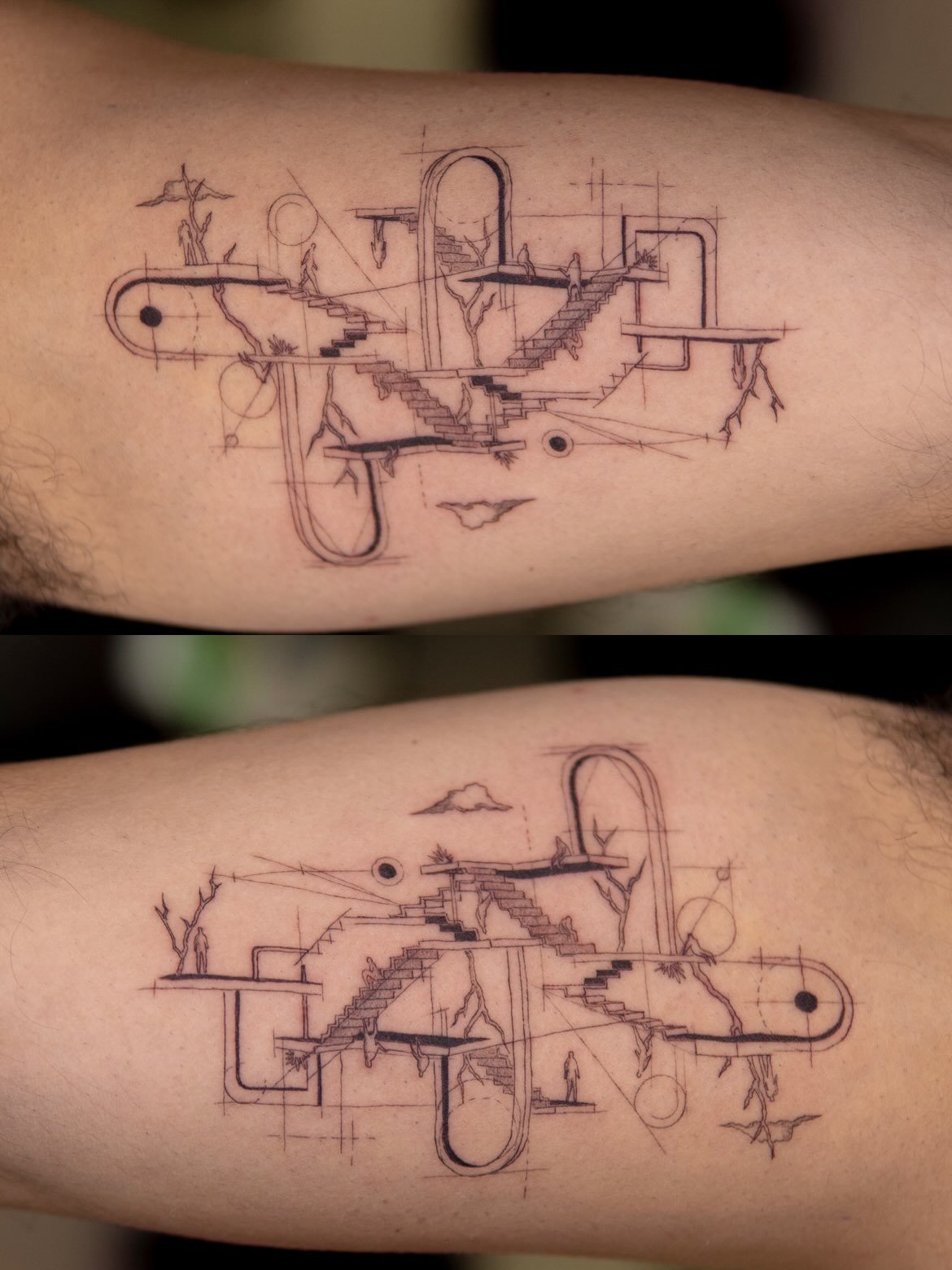
A compact flight of impossible-looking stairs can turn once around an empty central square on the outer forearm. At four inches tall, the tattoo relies on clean, fine black lines and a single translucent grey shadow rather than dense optical-illusion geometry. The steps subtly narrow as they rise, while one side remains deliberately unfinished.
This architectural approach suits someone who likes geometric tattoos but wants a hand-drawn edge rather than perfect symmetry. The open side is important: it keeps the design light and prevents multiple parallel lines from filling the entire shape. Ask the artist to print the stencil at actual size and check the smallest spaces. If the steps become difficult to count at a glance, simplify the structure.
20. Two Swallows With Open Flight Path
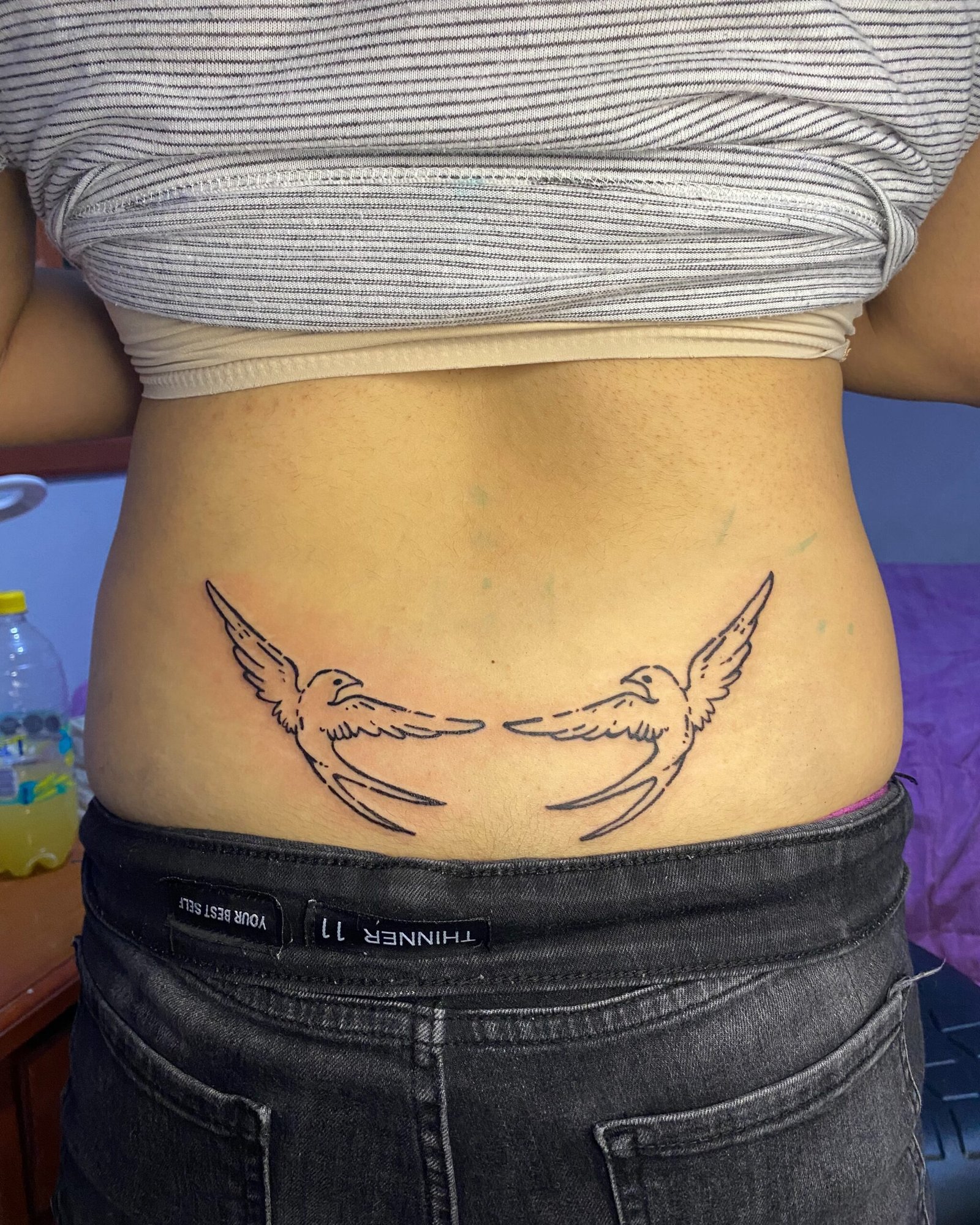
Two simplified swallows can cross the side of the torso on separate diagonals, connected visually by movement rather than a drawn trail. The larger bird spans three inches, while the second is slightly smaller and farther back. Fine black contours, selective dark wing tips, and open bodies keep the pair recognizable without resembling dense traditional swallow tattoos.
Spacing is the real design element: placed too close, the birds become a single dark cluster; too far apart, they lose their relationship. Swallows have accumulated different maritime and personal associations, so meaning should not be treated as universal. Use bird photography and broad tattoo traditions as references, then ask for original wing positions rather than copying a familiar flash arrangement.
21. Negative-Space Seed Pod
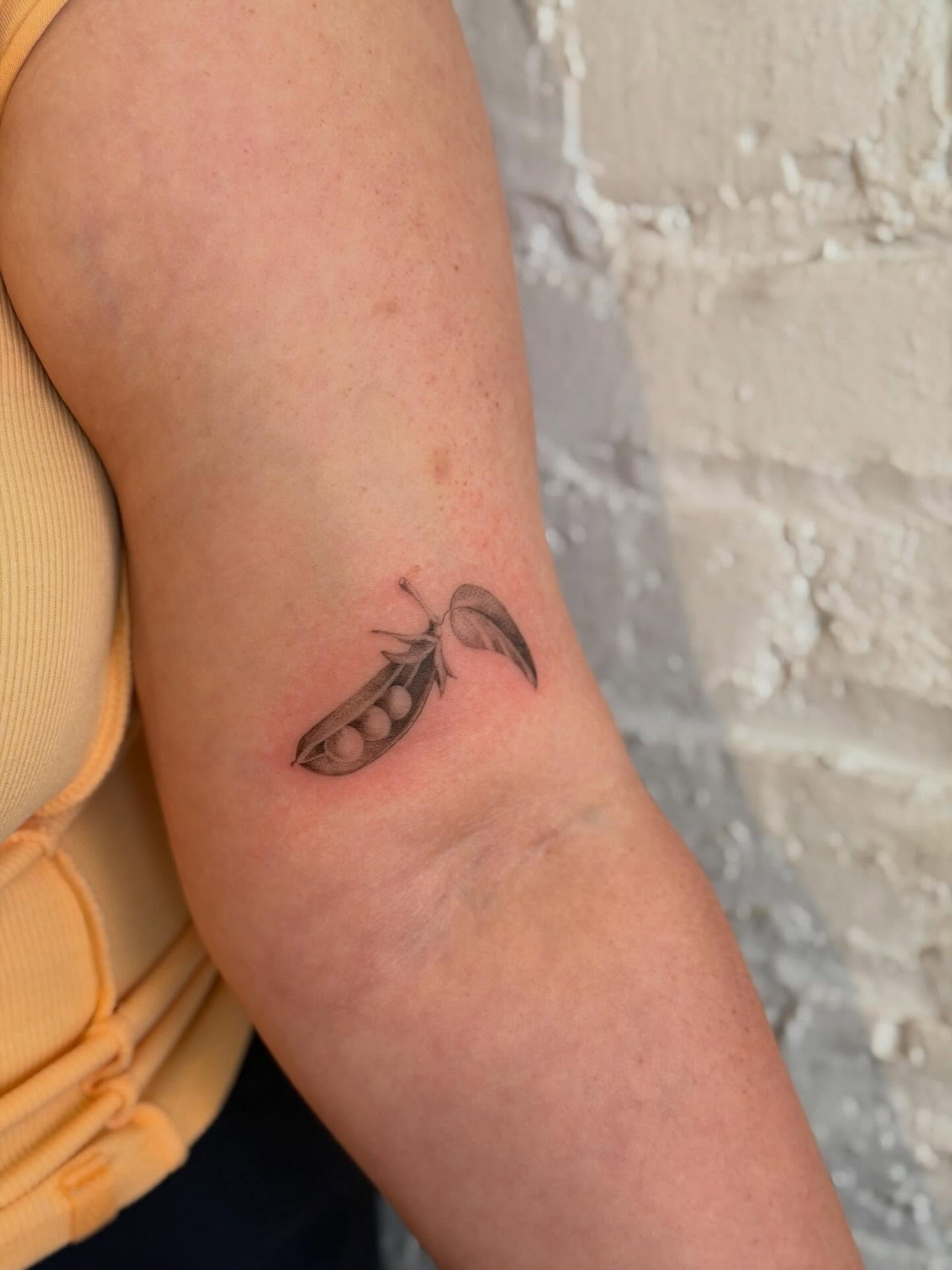
An enlarged seed pod offers an unconventional botanical subject for the inner forearm. At five inches long, the pod curves with the arm and contains four oval seeds defined mostly by untouched skin. A fine black shell contour, small areas of peppered grey texture, and a broken stem create enough variation without ornamental flowers or leaves.
The enlarged scale turns an easily overlooked natural form into a clear graphic composition. It also provides more longevity than a cluster of tiny seeds because each negative-space opening has room around it. Bring photographs of a specific plant if accuracy matters, but let the artist adapt the pod’s curve to the body. It can stand alone or become the first element in a restrained botanical sleeve.
What Makes a Tattoo Fineline?
Fineline tattooing describes a visual approach built from narrow, controlled lines and restrained tonal work. It does not automatically mean “tiny,” “minimalist,” or “single-needle.” A fine-line piece may use different needle configurations, and it can be large, shaded, colorful, or compositionally complex. Single-line art, meanwhile, describes an image that appears to follow one continuous path; it is a design language rather than a guarantee about how the tattoo is technically applied.
Microrealism also overlaps with fineline work but pursues a different result. It compresses realistic volume, texture, and recognizable detail into a small space. A simple flower outline or abstract profile does not become microrealism merely because it is small. These distinctions matter when researching artists: choose portfolios based on the actual visual result you want, and prioritize healed photographs over fresh, high-contrast close-ups.
How Fine-Line Tattoos Change Over Time
All tattoos change as skin, pigment, sun exposure, and the body itself change. Fine lines may soften, lighten, or appear less sharply separated; the outcome depends on the design, placement, execution, healing, and individual skin rather than a simple promise that every delicate tattoo will fade—or last—in the same way. Artist and dermatologist interviews on how fine-line tattoos heal and age likewise emphasize that technique, spacing, placement, and aftercare all affect the result.
This is why healed portfolio images matter. Look for work photographed months or years later, ideally at a similar scale, placement, and level of detail to your planned piece. Be skeptical of designs that depend on tightly clustered hairlines remaining photographically crisp forever. A capable artist may recommend wider gaps, fewer marks, or a slightly larger stencil. That is design judgment, not a failure to deliver delicacy.
Choosing an Artist and Preparing References
Look for an artist whose portfolio consistently includes healed fine-line tattoos, not someone who has posted only a handful among unrelated styles. Examine curves, line endings, repeated parallel marks, and areas where shading meets open skin. A strong portfolio should also show that the artist can simplify different subjects rather than applying the same floral formula to everything.
Build a compact reference board that explains your preferences without asking for a duplicate. Include the subject, desired mood, approximate size, body placement, preferred level of shading, and examples of line density you like. Mark what you dislike as well. Photographs of real plants, animals, buildings, or landscapes are often more useful than a board made entirely from other people’s tattoos. A professional artist can then translate the source material into a composition suited to your anatomy, skin, and long-term priorities.
Final Thoughts
The most convincing fineline tattoo ideas use restraint deliberately. Their impact comes from the distance between two lines, the way a stem turns around a bone, or the decision to leave part of an image unfinished. Small does not automatically mean subtle, and complicated does not automatically mean sophisticated. Scale, spacing, and placement determine whether a delicate concept reads clearly beyond a close-up photograph.
Save references for their visual principles rather than treating any finished tattoo as a template. Identify what actually attracts you—the open shading, asymmetry, botanical accuracy, muted color, or relationship to the body—and bring those observations to an experienced professional artist. Once the tattoo has healed, long-term sun protection is sensible for both tattooed and untattooed skin; the FDA’s tattoo safety guidance also explains potential reactions and when a skin concern warrants medical attention.