
18 Small Tattoo Placement Ideas for Unexpected Spots
A small tattoo does not need to sit in the center of a wrist or float arbitrarily on an ankle. The body has quieter visual pockets—beneath the collarbone, behind the upper arm, beside the Achilles tendon, or just below a waistband—where a compact design can feel discovered rather than displayed.
These small tattoo placement ideas pair each less-obvious location with a shape that suits its anatomy. The collection covers discreet and visible placements, curved and flat surfaces, clothing interactions, movement, and future expansion. Use the examples to identify placement principles for an artist to adapt, not as finished designs to copy line for line.
1. Tiny Horizon Tattoo Below the Rear Hairline
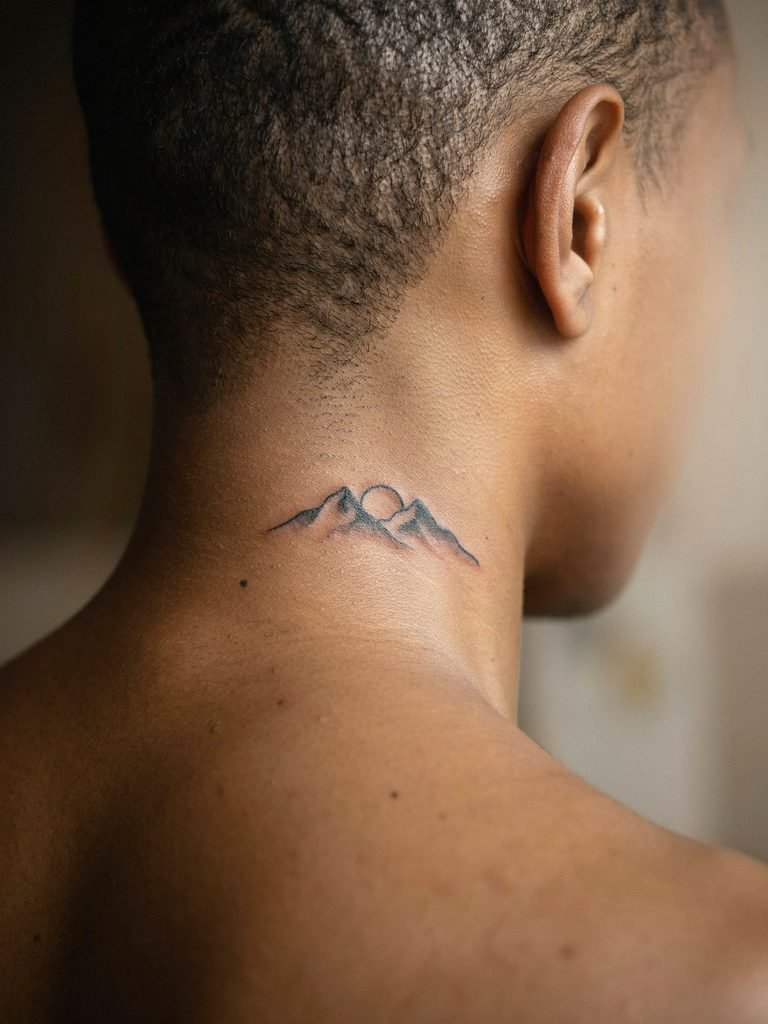
A two-inch landscape line sits below one side of the rear hairline rather than directly at the center of the nape. Two low mountain peaks, a negative-space sun, and one grey horizon form a compact horizontal composition. The design angles subtly toward the shoulder, following the transition from neck to upper back.
This offset placement feels less formal than a perfectly centered nape tattoo and changes visibility with hair length and collars. Keep the landscape sparse; miniature trees, birds, and detailed ridges would overload the narrow space. Check the stencil from behind and in profile, since a line that appears level from one angle may tilt when the neck turns.
2. Crescent Tucked Tattoo Behind the Upper Arm
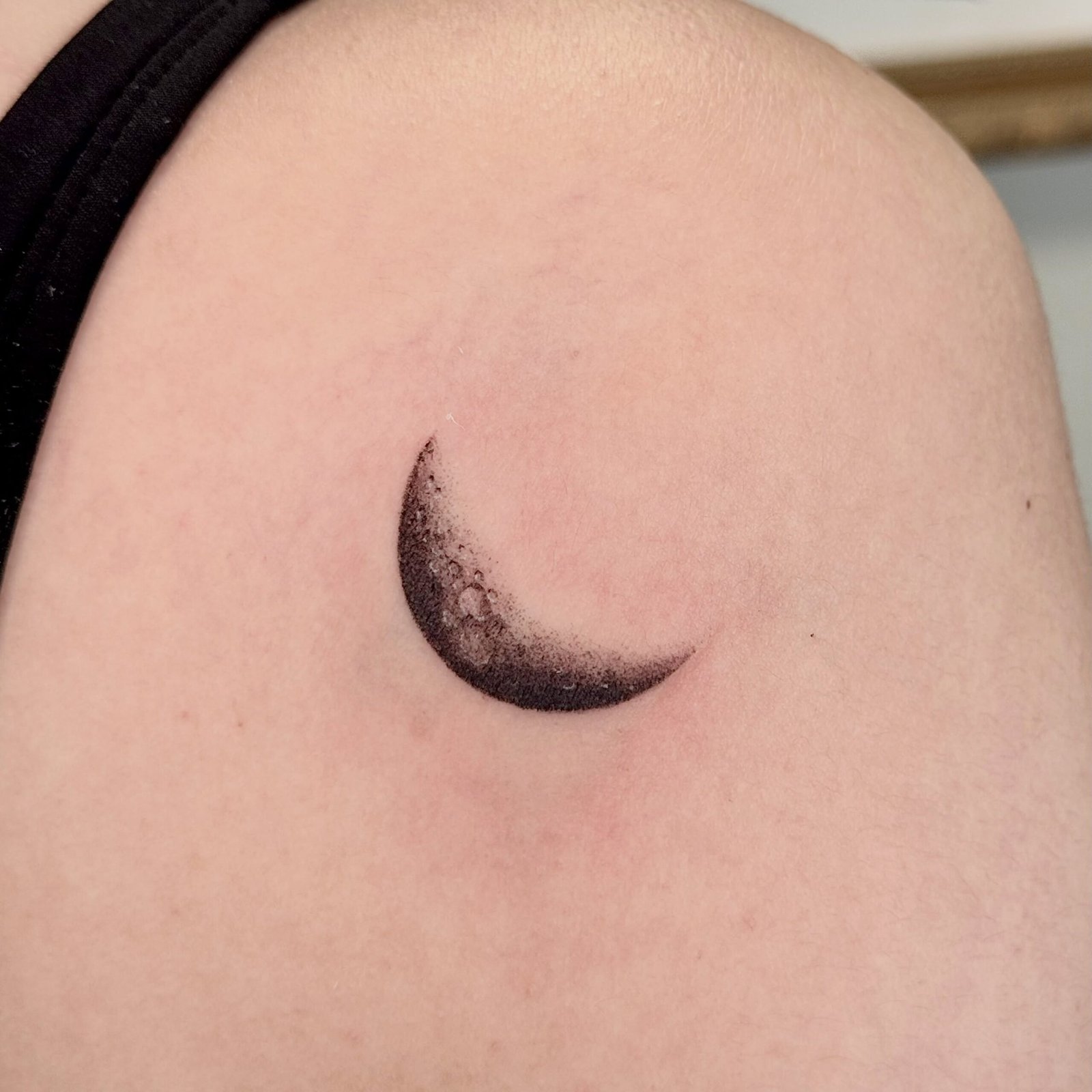
A narrow crescent moon occupies the rear inner edge of the upper arm, visible only when the arm moves away from the torso. At roughly two inches tall, it uses a charcoal-black outer curve, a softly stippled interior edge, and one small negative-space notch. The points follow the arm’s vertical direction instead of facing sideways.
The placement offers a genuine reveal without sitting in the deepest underarm area. Sleeveless clothing may show only a sliver when the arm rests, while movement exposes the complete shape. Avoid placing the design where skin folds obscure its focal detail. This location can also preserve the outer upper arm for a future larger piece or sleeve.
3. Matchstick Tattoo Above the Elbow Point
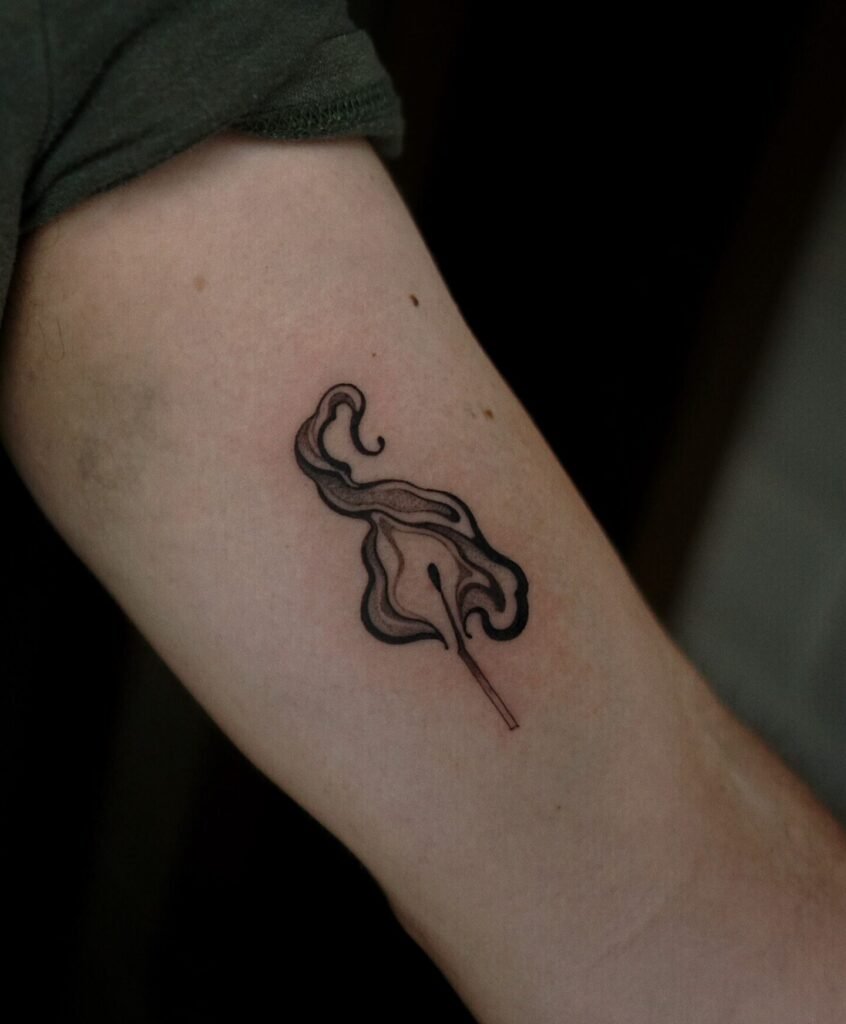
A burned match lies diagonally on the back of the arm, just above and to one side of the elbow rather than crossing the joint. The two-and-a-half-inch design uses fine black woodgrain, dark charcoal stippling at the tip, and one muted amber accent. Its angle echoes the outer line of the upper arm.
This often-overlooked area suits narrow objects and becomes more visible when the elbow bends. Keeping the tattoo above the most active crease allows the match to retain its straight silhouette during movement. It can stand alone or join a patchwork sleeve later. Avoid positioning the charred head directly over the elbow point, where the curved surface may visually distort it.
4. Moth Tattoo Beneath the Shoulder Blade
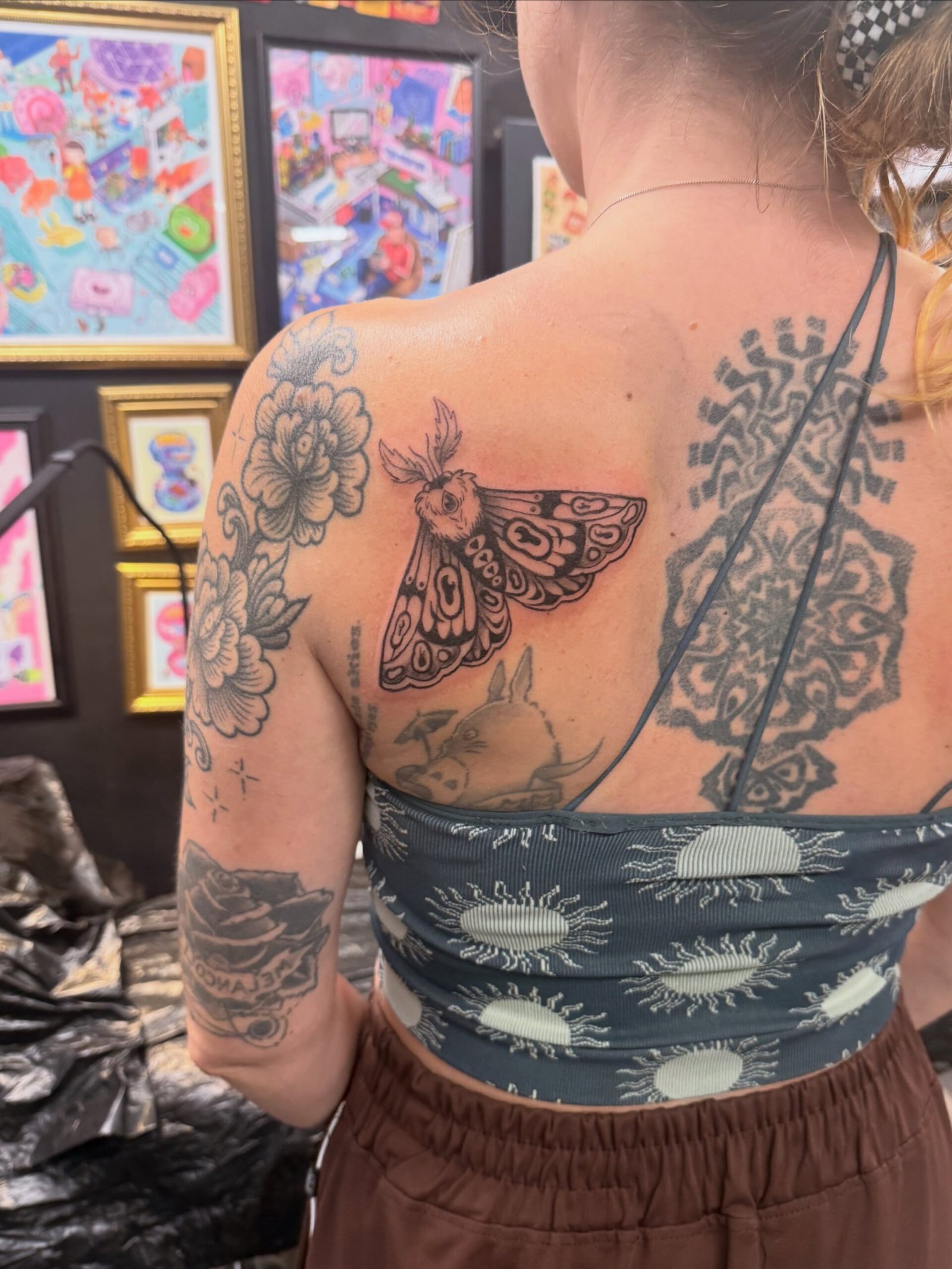
A small moth rests below the lower point of one shoulder blade, placed rather down than a conventional upper-back tattoo. At three and a half inches wide, it uses fine black wing contours, pale grey stippling, and broad negative-space cells. The upper wings angle toward the scapula while the lower wings taper toward the ribs.
The body landmark gives the tattoo a clear reason to occupy an otherwise quiet area. It appears briefly in low-back or open-side clothing but remains concealable by most shirts. Because the scapula moves, check the stencil with the arm both relaxed and extended. The moth should remain anatomically readable without filling every wing compartment with miniature pattern.
5. Botanical Stem Tattoo Along the Side Ribs
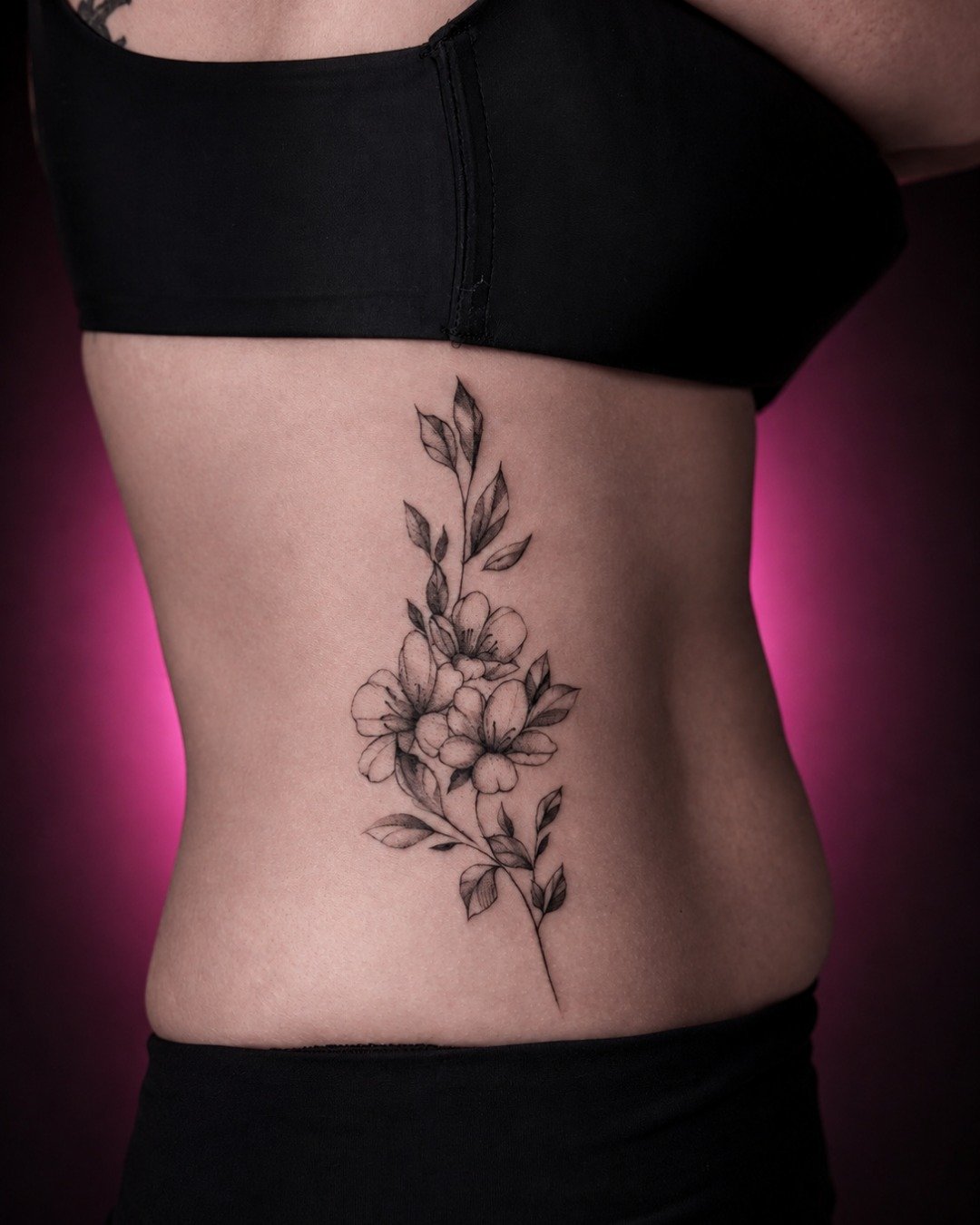
A four-inch botanical stem rises along the upper side ribs beneath the arm, staying clear of the deepest underarm fold. Alternating leaves follow the torso’s curve, while two small buds angle toward the back. Fine black outlines and minimal grey wash keep the narrow piece visually open.
This placement is more discreet than a centered rib tattoo and more dynamic than a straight vertical sprig. The design shifts with breathing and arm position, so it should be evaluated in a neutral standing posture. A real plant species can personalize the form, but dense clusters are unnecessary. Clothing coverage depends on sleeve depth and side seams rather than neckline alone.
6. Orbit Tattoo Beneath the Collarbone End
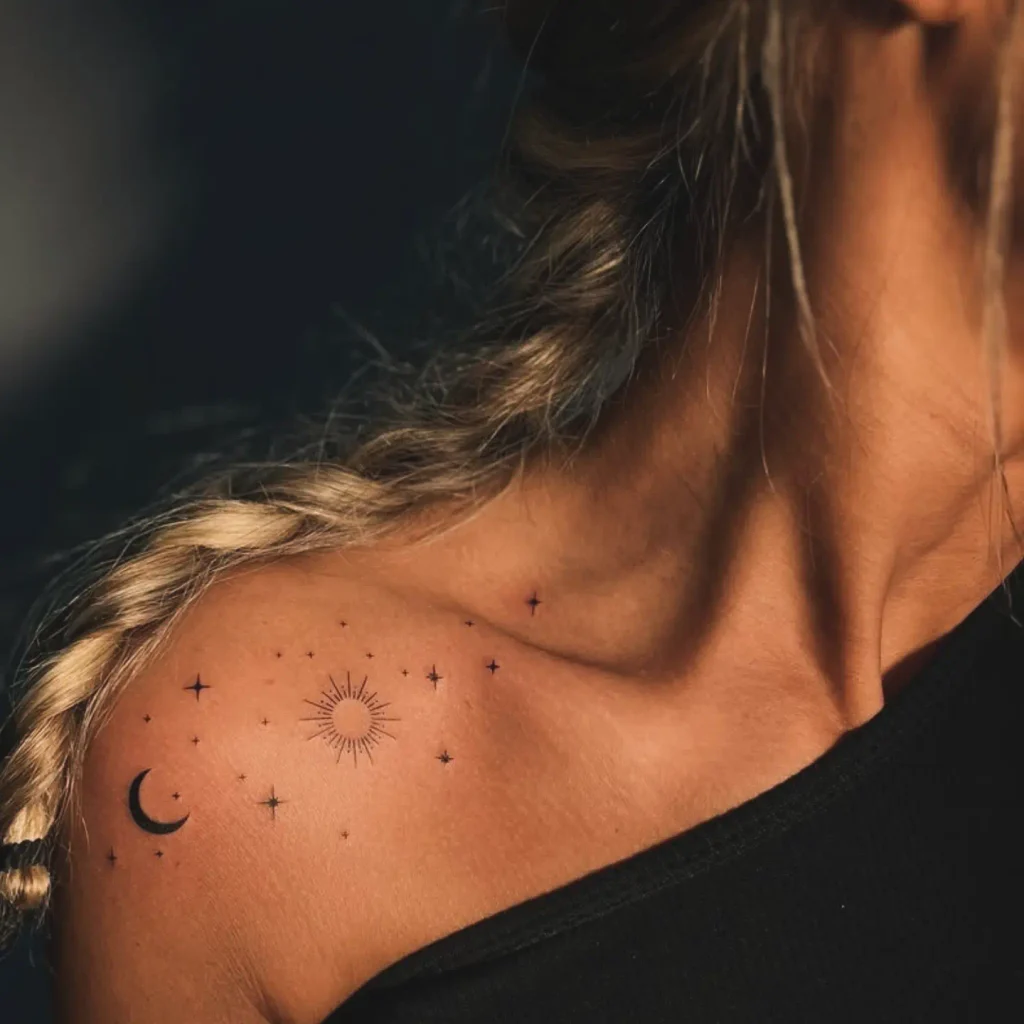
A small tilted orbit sits beneath the outer end of the collarbone, closer to the shoulder than the center of the chest. The two-inch design includes one muted grey planet, a thin black ellipse, and two offset dots. The orbit follows the clavicle’s downward slope rather than remaining perfectly horizontal.
This outer-chest pocket is less expected than a central collarbone tattoo and can disappear beneath a standard crew neckline. It also preserves the broad chest for future work. Test the placement with common shirt and bag straps, which may repeatedly crop the composition. Keep the celestial details sparse so the design remains clean against the collarbone’s natural shadows.
7. Miniature Arch Tattoo at the Upper Sternum
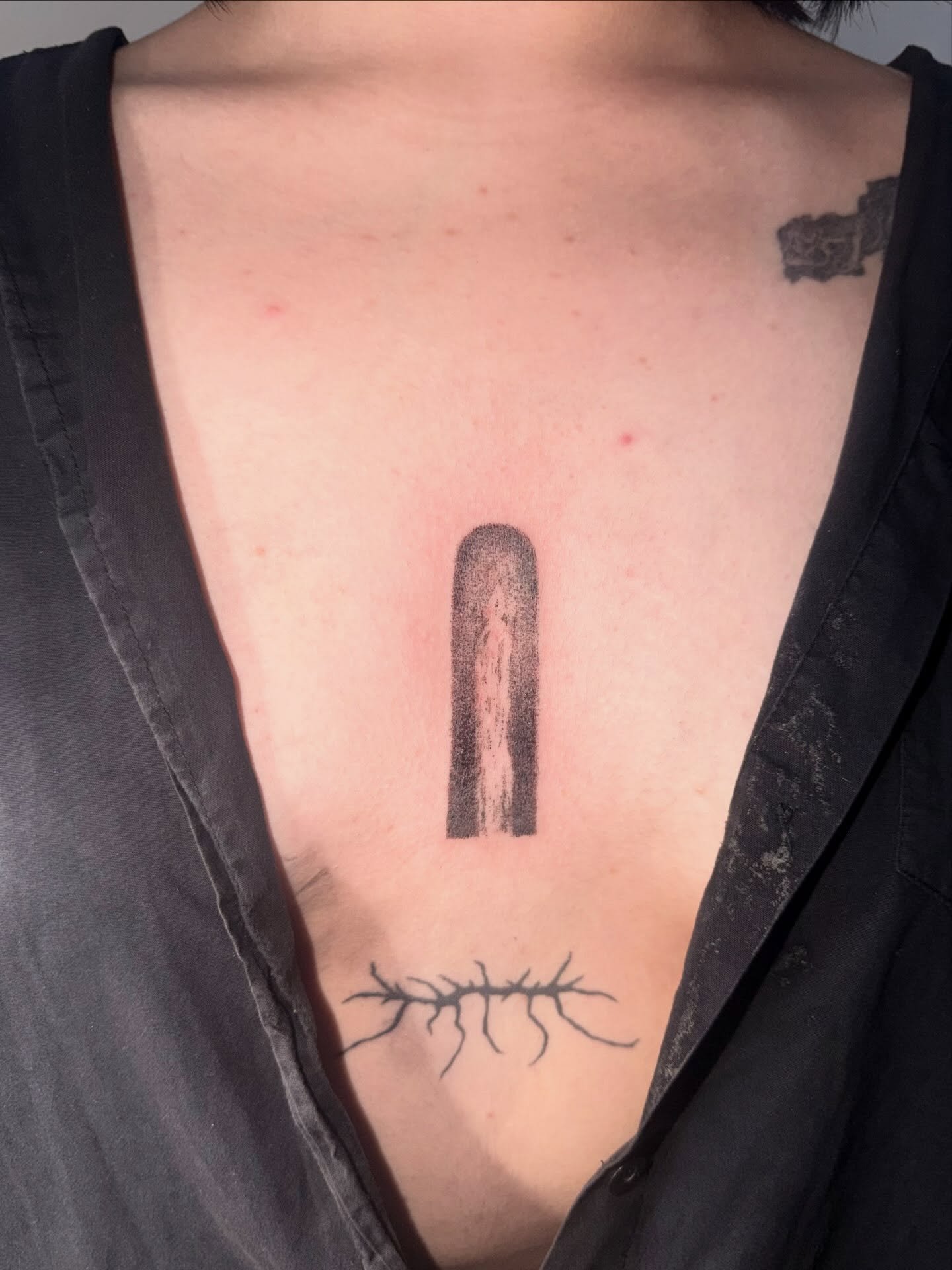
A narrow arched doorway sits high on the sternum, just below the point where the collarbones meet. At two and a half inches tall, it uses fine black architectural lines, one grey step, and an open center containing a small negative-space circle. The frame remains simple, with no masonry or ornamental tracery.
The location gives a compact symmetrical image a strong central axis while keeping it easier to conceal than a throat tattoo. Necklines determine how often it appears, so test the stencil with everyday clothing. Breathing and posture affect the surrounding skin; the design should be checked while standing and seated. Simplifying the architecture prevents the tattoo from resembling a compressed building illustration.
8. Wave Tattoo Inside the Inner Elbow Pocket
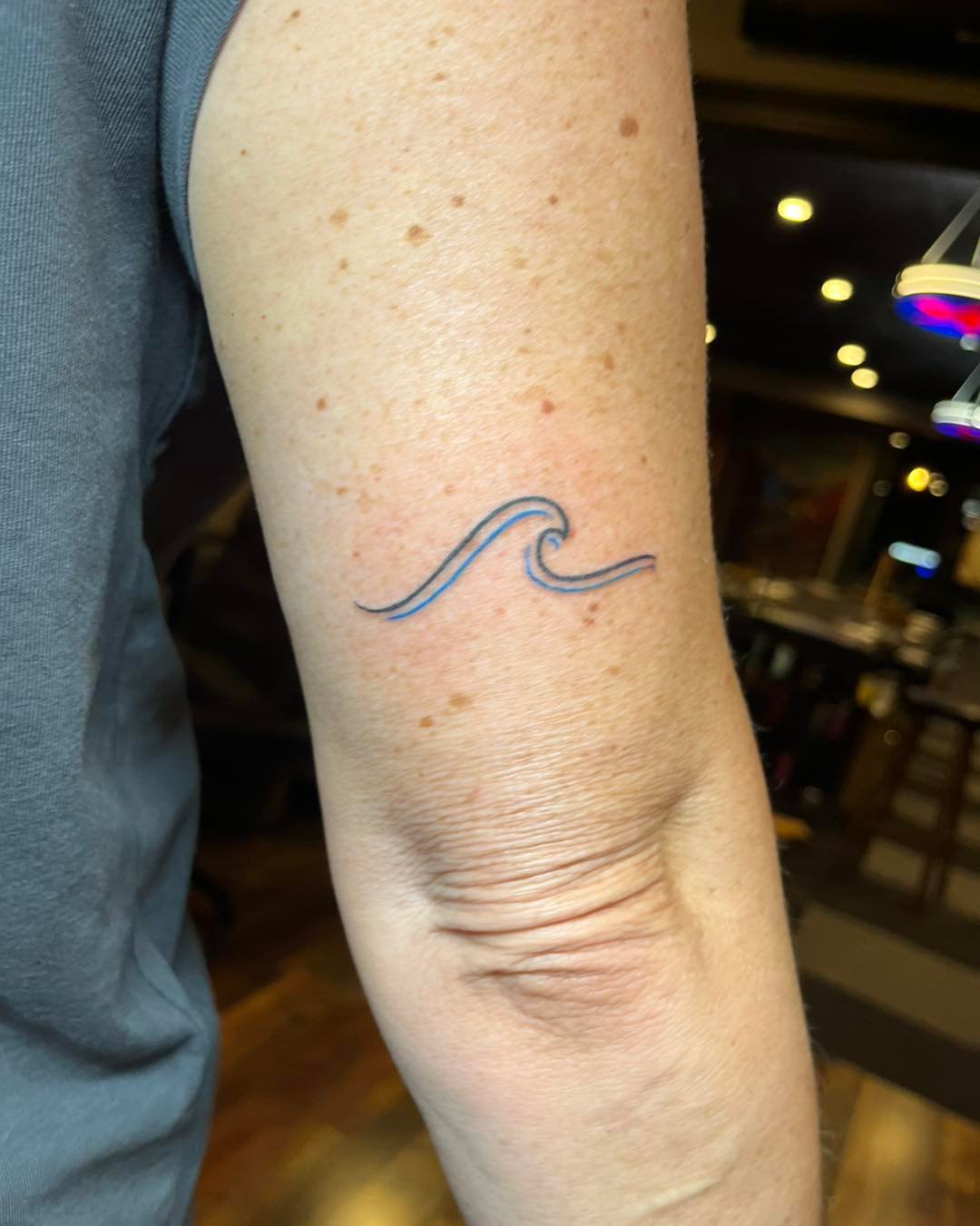
A simple wave occupies the upper inner forearm, sitting just below and slightly outside the elbow crease rather than directly across it. The two-and-a-half-inch horizontal design uses one medium black crest, two blue-grey water lines, and a clean negative-space break. Its curve faces toward the bicep when the arm is bent.
This location reveals the tattoo during ordinary gestures while keeping it partly hidden when the arm rests. Avoid crossing the deepest crease with essential details, since movement changes their alignment. The wave should remain abstract at this scale; foam, birds, and horizon scenery would crowd it. Its direction can be reversed according to how the wearer prefers to view the design.
9. Tiny Key Tattoo Beside the Wrist Bone
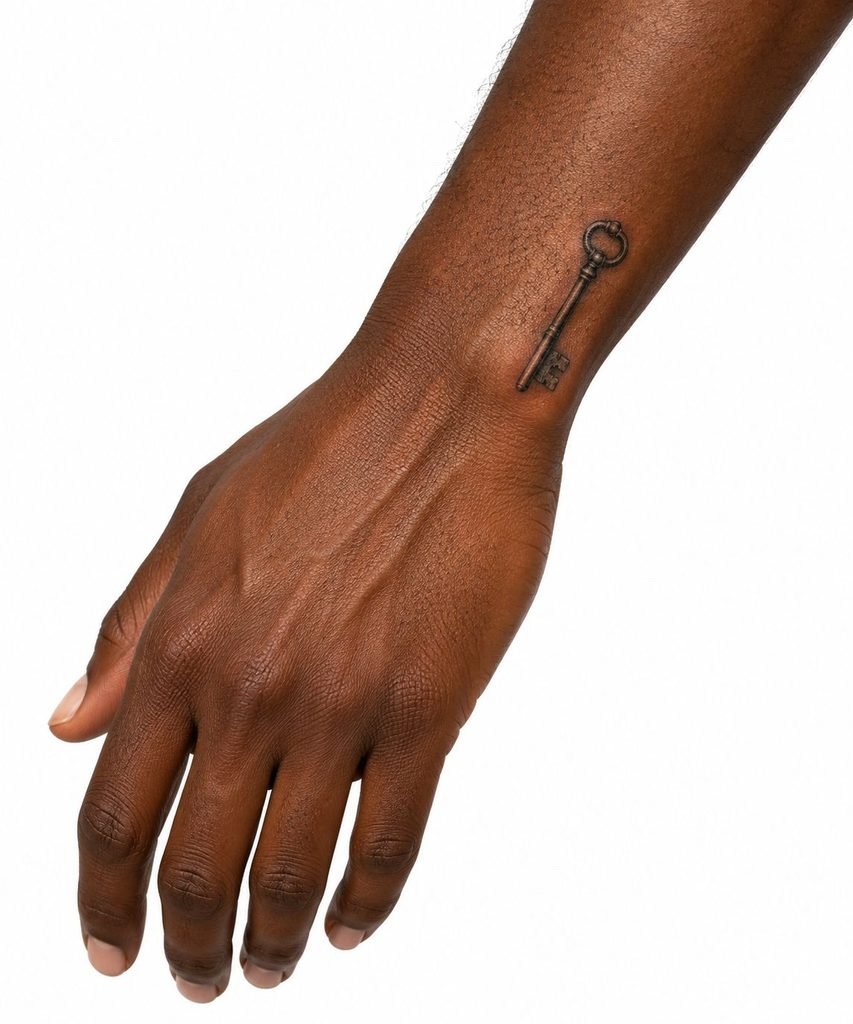
A small antique-inspired key sits on the outer side of the wrist beside the ulna rather than on the central inner wrist. At two inches long, it uses a medium black contour, pale grey metal shading, and a plain circular bow. The key follows the forearm’s length and ends before the hand begins.
This side placement is visible from some angles and almost absent from others. Watches may leave it clear, while certain bracelets will overlap it, so bring accessories to the consultation. Avoid copying a recognizable fictional prop or adding tiny lettering to the bow. The key’s tooth pattern and negative-space opening provide enough structure for the compact format.
10. Leaf Tattoo Along the Thumb Web Edge
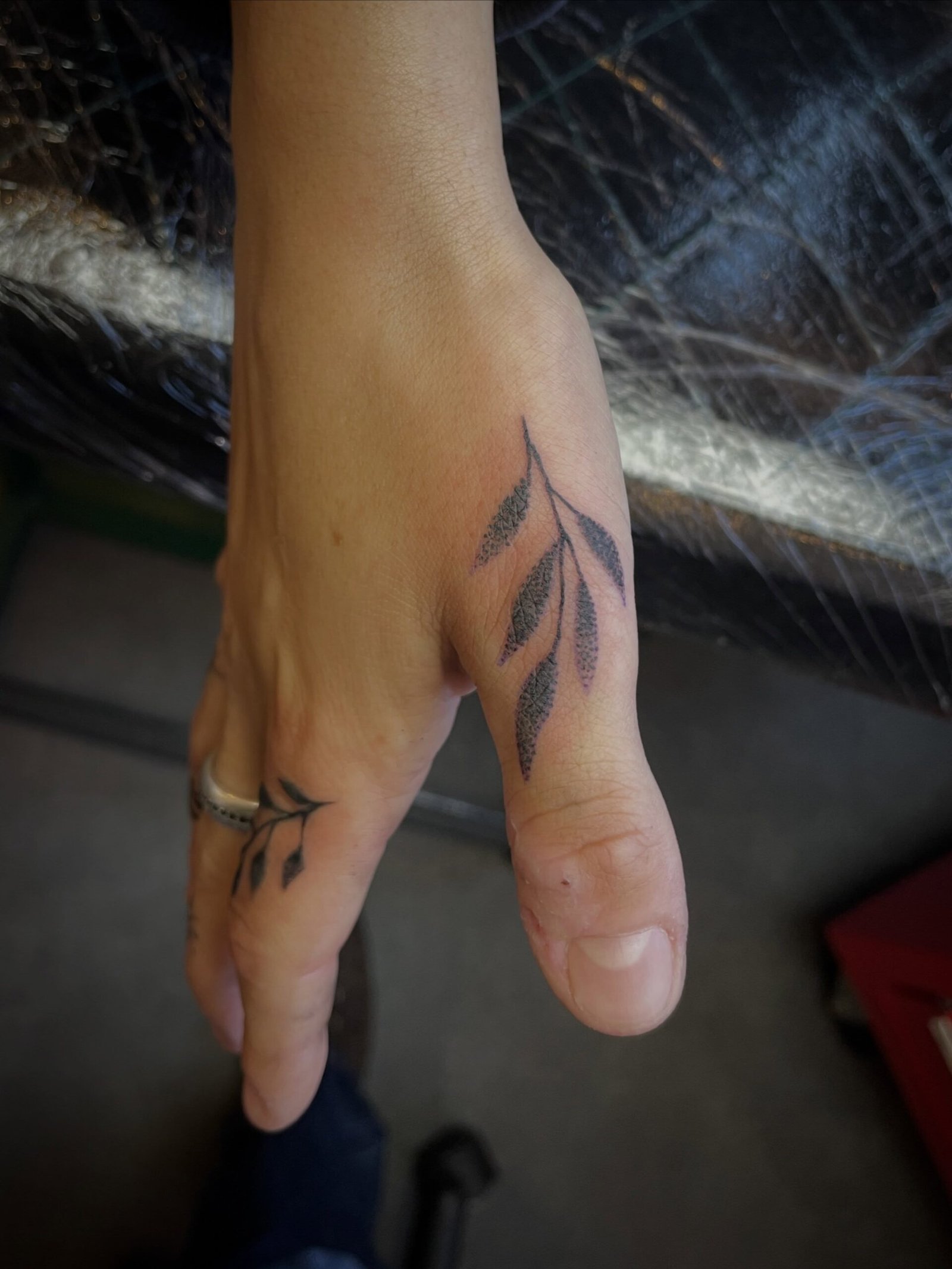
A narrow leaf follows the fleshy outer edge between the thumb and wrist without entering the deepest webbing. The one-and-a-half-inch design uses a firm black contour, three widely spaced veins, and one pale green section. Its stem points toward the wrist while the tip angles toward the thumb.
This area is highly visible and frequently used, so it demands a design with a strong silhouette rather than dense micro-detail. The placement also interacts with hand washing, movement, work, and sun exposure; discuss practical expectations with an experienced artist. Keep the leaf off the actual finger joint and avoid placing its focal lines inside the deepest crease.
11. Crescent Tattoo on the Side of the Index Finger
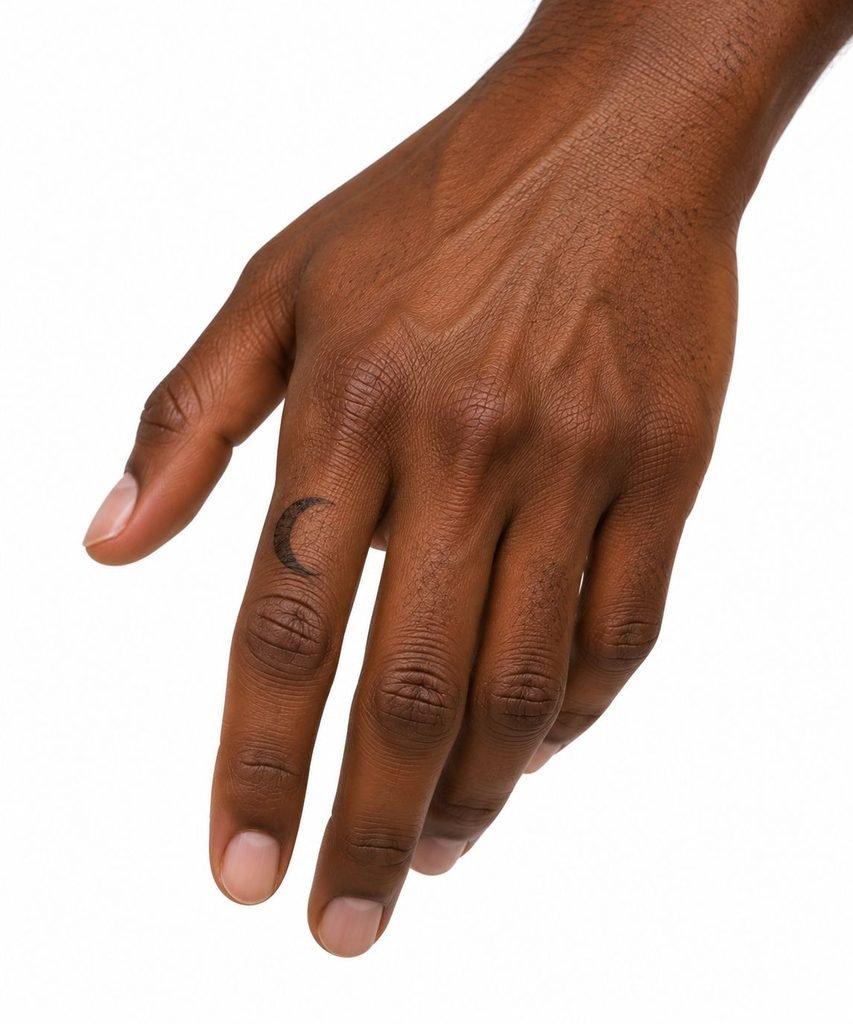
A solid crescent sits along the outer side of the index finger between the knuckle zones. At just under an inch, it uses a clear charcoal-black shape with one narrow negative-space cut. The points face toward the fingertip, keeping the tattoo aligned with the finger rather than rotating toward the hand.
The location makes a tiny design noticeable during conversation and hand movement. It is not a reliably hidden placement, despite disappearing when the fingers close. Frequent use and exposure create different practical demands from protected body areas, so choose a professional with healed finger work and realistic advice. A simple silhouette is more suitable here than a constellation or detailed moon face.
12. Shell Tattoo Along the Hip Bone
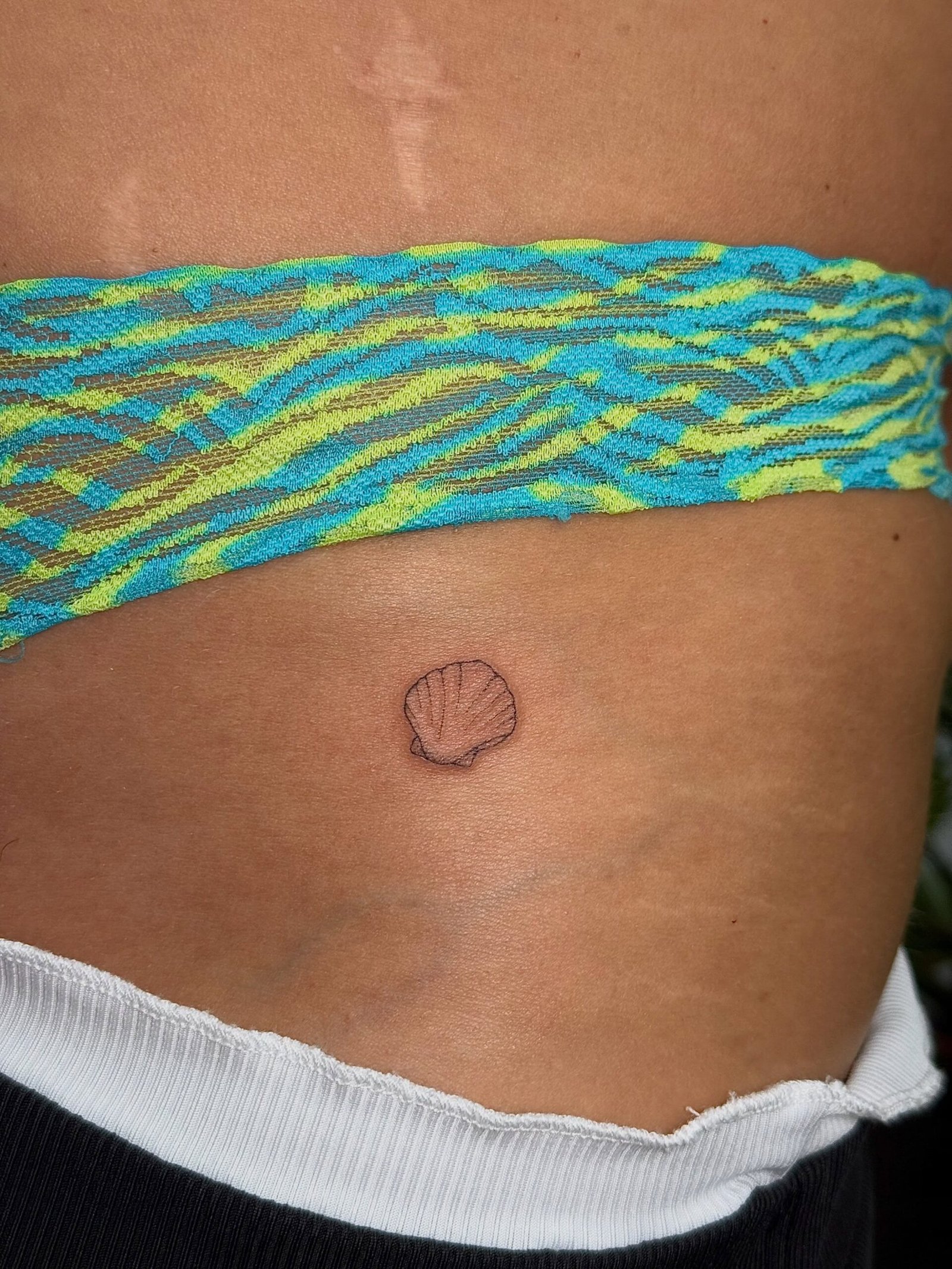
A small spiral shell sits just above the outer hip bone, with its opening directed toward the waist and its ridges following the iliac curve. The three-inch design uses fine black contours, sparse sandy-grey dotwork, and broad negative space inside the spiral. It remains separate from the waistband line.
The hip’s curved surface gives the shell a natural resting place without requiring a larger beach scene. Depending on clothing, the piece can be private, partially revealed, or fully visible. Test the stencil while standing and seated because waistbands and skin folds shift. If the interior ridges begin to crowd the center, enlarge the tattoo or remove lines rather than making them finer.
13. Constellation Tattoo at the Side Waist
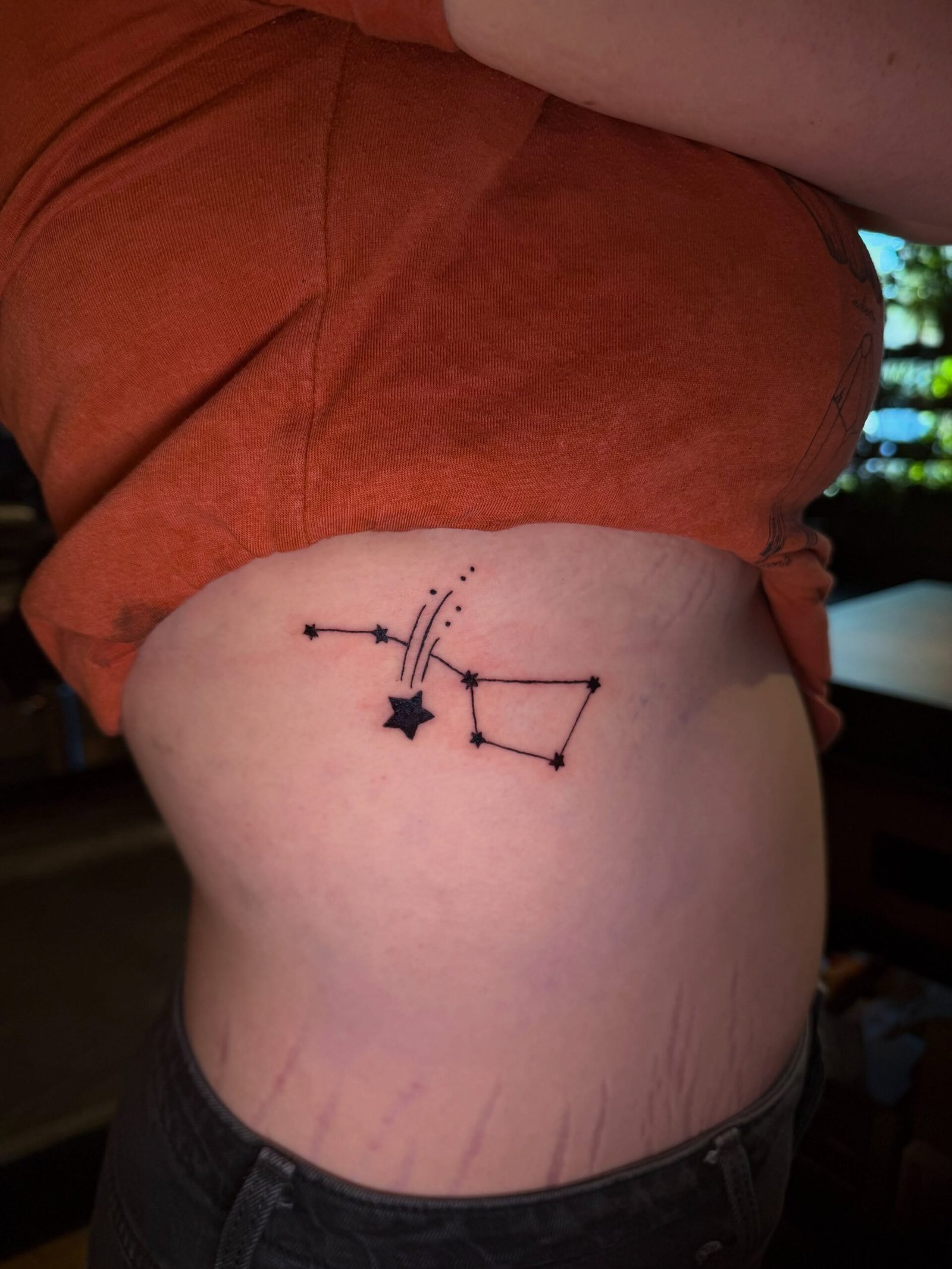
Five varied stars form a loose vertical constellation along the side waist, positioned between the lower ribs and hip. The three-inch composition uses two fine connecting lines, three black points, and two soft grey dots. It follows the torso’s inward curve rather than creating a rigid column.
This placement appears briefly with movement or cropped clothing but remains covered by most everyday outfits. The open structure suits the narrow waist better than a dense circular motif. Use an invented constellation unless accurate sky mapping matters, in which case bring verified data. Keep each star large enough to look intentional against natural skin texture and body movement.
14. Moth Tattoo at the Inner Thigh Edge
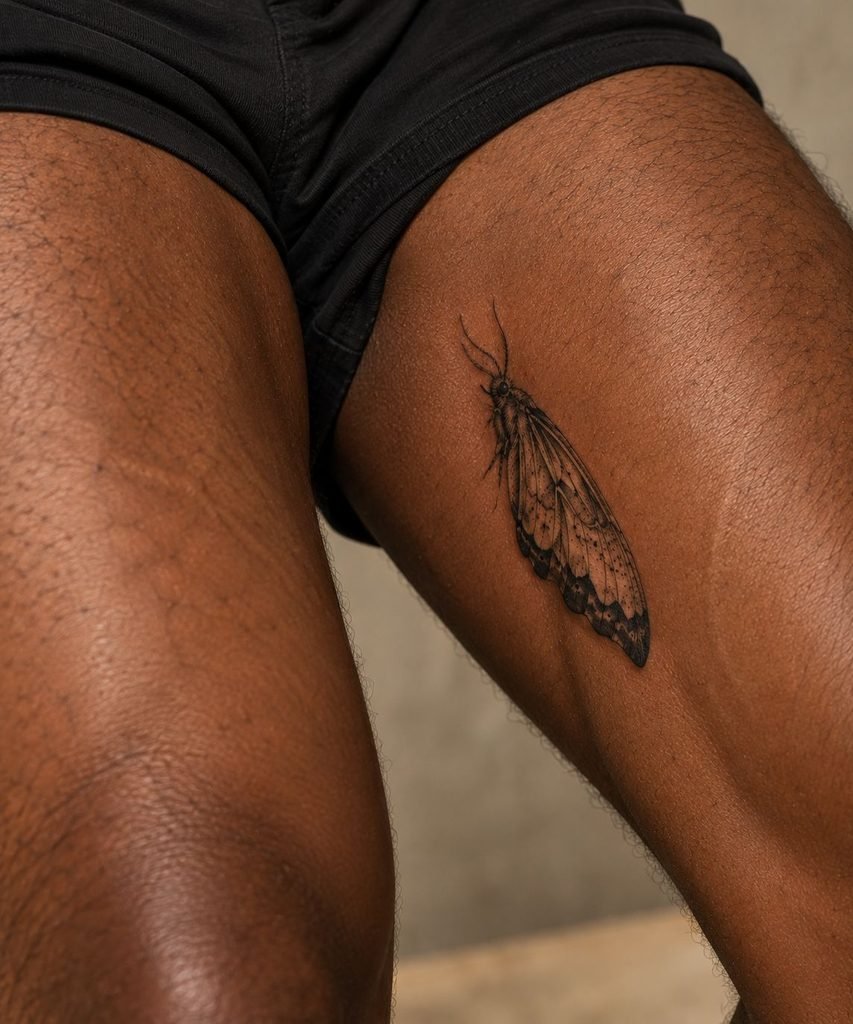
A compact side-view moth rests near the inner edge of the upper thigh, positioned away from the deepest groin crease. At three inches tall, its folded wings use fine black venation, a darker lower border, and pale grey stippling. The body follows the thigh’s length while the antennae angle outward.
This private placement allows a detailed small tattoo to occupy a relatively broad surface. It is less likely to interrupt a future front-thigh composition than a centered design, but plans for larger leg work should still be discussed. Clothing seams and leg movement affect the exact position. The moth needs enough space between its folded wings and body to avoid becoming a dark leaf-like shape.
15. Botanical Curve Tattoo Below the Gluteal Fold
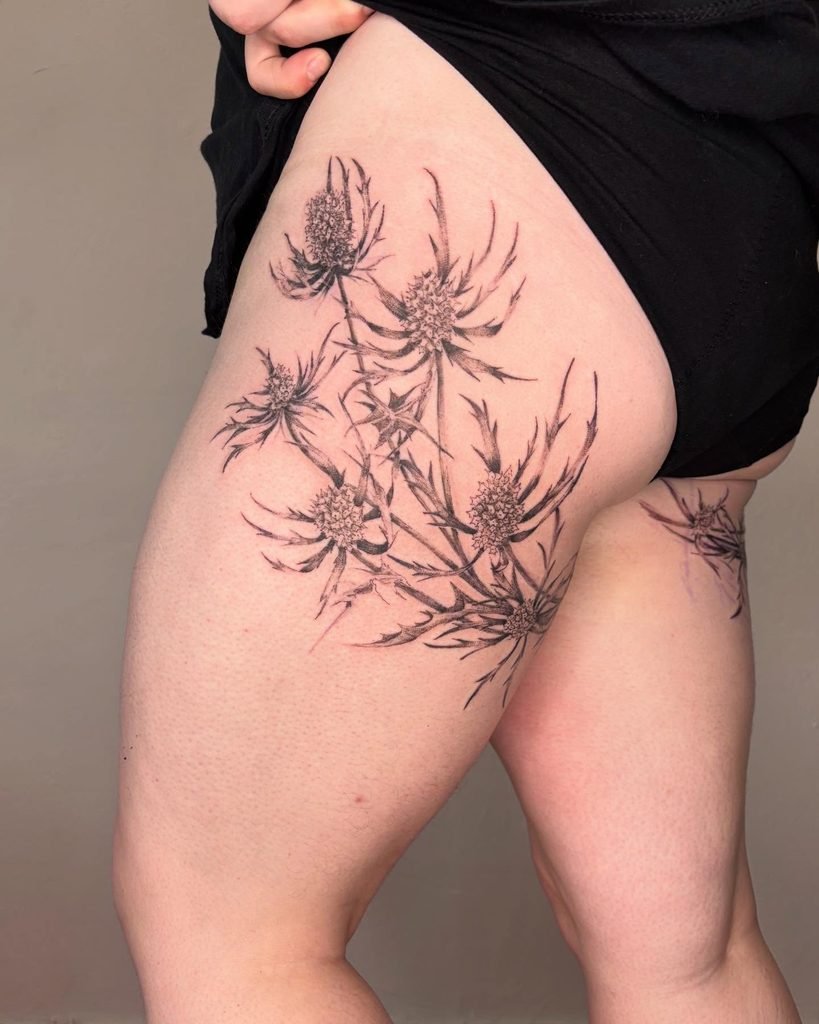
A slender three-inch botanical stem follows the upper rear thigh just below the gluteal fold, rather than sitting directly inside it. Three leaves angle downward with the leg, and one small bud points outward. Fine black outlines and minimal grey wash keep the tattoo from becoming visually heavy in this concealable area.
The placement is private under most clothing but may appear with swimwear or shorter garments. Its curved boundary gives a botanical subject a natural guide. Essential details should remain below the deepest fold so they are not repeatedly hidden or distorted through sitting. A consultation should include comfortable standing and seated views, handled with the same professionalism as any other body placement.
16. Arrowhead Tattoo Beside the Knee
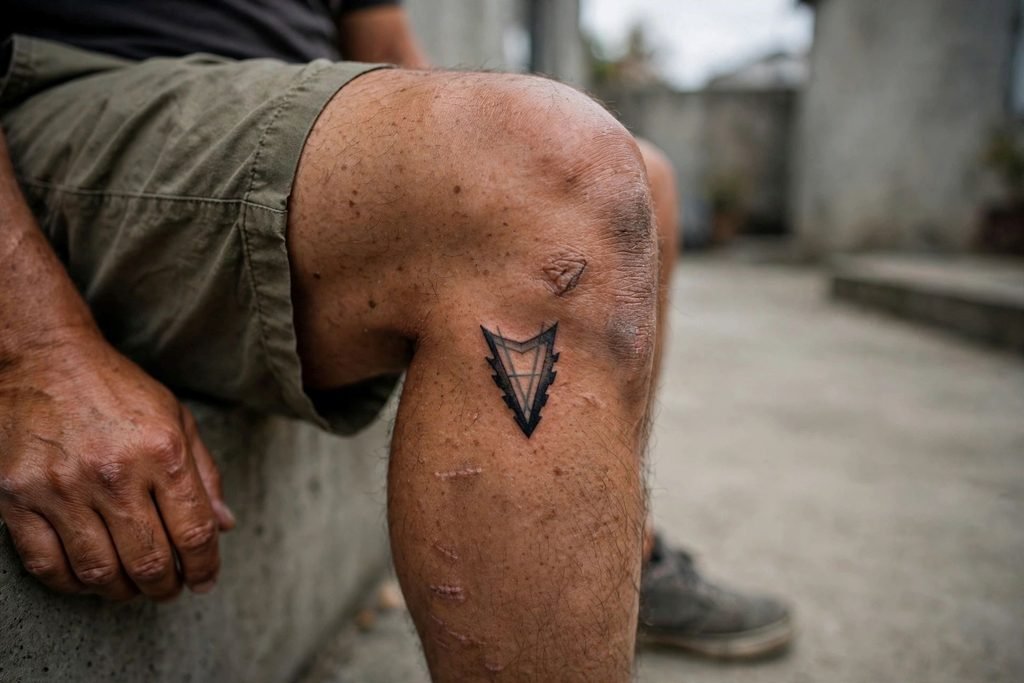
A small abstract arrowhead sits on the outer side of the knee, between the lower thigh and upper shin rather than over the kneecap. At two inches tall, it uses a bold black perimeter, one open center, and two grey etched lines. The point follows the leg’s downward direction.
The design occupies an anatomical transition without crossing the joint’s most active surface. Its compact geometry remains legible as the knee bends, although the exact viewing angle changes. This is a contemporary abstract form, not a claim to a specific Indigenous artifact or pattern. Avoid borrowed cultural decoration; an original neutral geometry is both clearer and more responsible.
17. Tiny Wave Tattoo Beside the Achilles Tendon
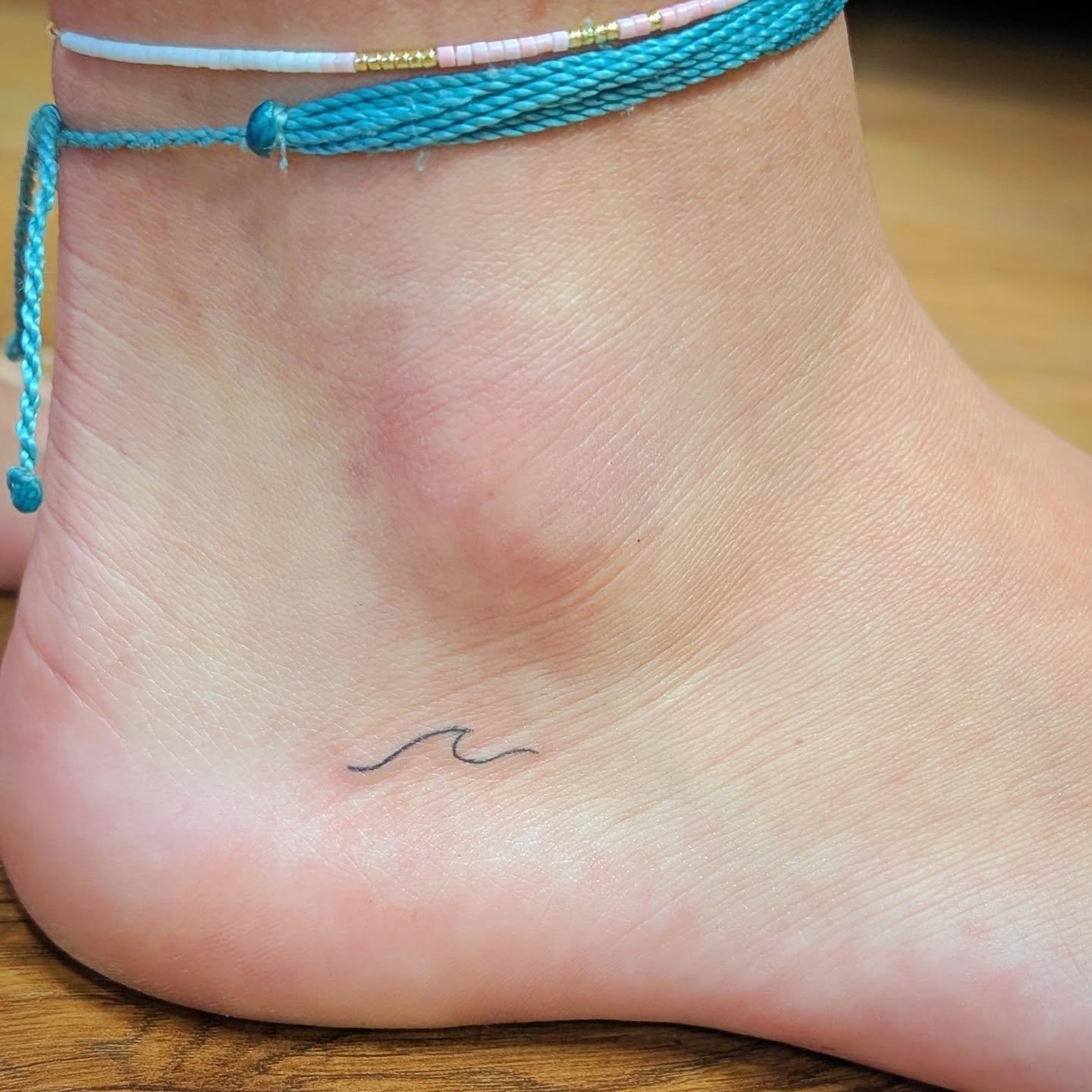
A two-inch wave curves along the outer side of the Achilles tendon, beginning above the heel and rising toward the calf. One medium black line defines the crest, while two pale blue-grey strokes suggest receding water. A broad negative-space break keeps the design from becoming a miniature anklet.
The narrow vertical placement lets the wave appear to climb with the tendon. Shoes and socks may cover or cross it, so bring typical footwear into the placement discussion. Avoid locating essential details directly on the heel or beneath a common shoe edge. This works best for a simple, directionally clear subject rather than a detailed coastal scene.
18. Seed Pod Tattoo Along the Outer Foot
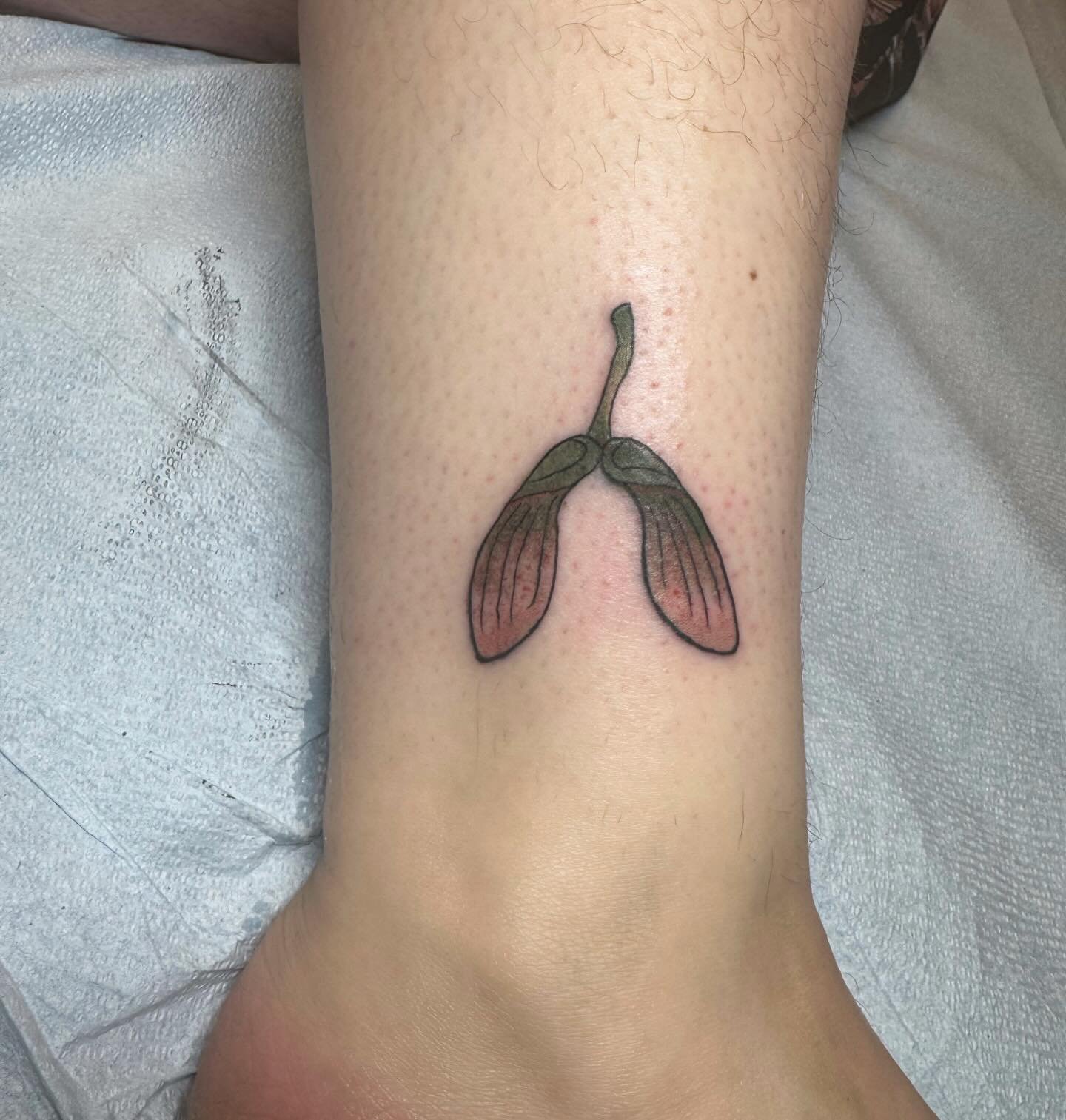
A narrow seed pod runs diagonally along the outer top edge of the foot, positioned behind the smallest toe and ahead of the ankle. The three-inch design uses a fine black shell contour, three seeds formed from negative space, and sparse charcoal stippling. Its stem points toward the ankle, following the foot’s natural length.
This placement is visible in open footwear yet disappears in most shoes. Foot movement, exposure, and shoe contact introduce practical considerations that should be discussed with an artist experienced in healed foot tattoos. The enlarged seed shapes make the design more suitable than a cluster of tiny dots. Check the stencil while standing so its angle relates to the weight-bearing foot, not only a raised appointment pose.
What Makes a Placement Unexpected but Effective?
Unexpected does not mean random. A convincing placement usually relates to a landmark, curve, or moment of movement: a horizon below the hairline, a shell along the hip bone, or a wave beside the Achilles tendon. The location gives the tattoo a visual reason to be there.
Scale also matters. Small imagery often looks deliberate near a defined feature—the wrist bone, elbow, collarbone end, knee edge, or shoulder blade—because the anatomy frames it. The same design floating in the center of a large thigh or back may feel unresolved and occupy space better suited to future large work. Before approving the stencil, look at the entire limb or torso rather than only the immediate patch of skin. The right placement should work both as a close detail and as part of the body’s broader composition.
Visibility, Clothing, and Friction
A discreet tattoo is not automatically hidden in every context. Hair exposes a nape piece when tied back, sleeves reveal the rear upper arm during movement, and swimwear changes the visibility of hip or upper-thigh placements. Think through workwear, exercise clothing, formal clothes, accessories, and seasonal wardrobes instead of relying on one outfit.
Repeated contact also deserves attention. Watchbands, waistbands, tight seams, shoes, socks, glasses, and bag straps may cross a proposed location. That interaction does not automatically make the placement unsuitable, but it should affect the design’s exact height and boundaries. Bring commonly worn accessories to the consultation or provide clear photographs of how they sit. A shift of less than an inch can keep a focal detail away from a crease, seam, or shoe edge without losing the placement’s original character.
Keeping a Small Tattoo Readable
The central silhouette should make sense before the viewer notices interior detail. A shell needs its spiral, a moth needs clear wing separation, and a key needs an open bow and recognizable teeth. Once those essential features are established, shading and decorative marks can be reduced aggressively.
Do not confuse a small footprint with unlimited miniature detail. Closely spaced lines, tiny lettering, and complex faces may photograph well when fresh and magnified but provide little visual separation at normal viewing distance. Increase the size or remove elements when the stencil feels congested. Slightly varied line weights can help: a stable outer contour, lighter internal lines, and deliberate negative space usually create more hierarchy than making every stroke equally thin. Review an artist’s healed small-scale work, ideally in placements with similar movement and exposure.
Choosing an Artist and Planning Ahead
Choose an artist whose healed portfolio matches the actual task. Small botanical linework, compact color, geometric forms, and miniature animal anatomy require different strengths. Evaluate clean curves, line endings, dark fill, negative-space gaps, and the way designs sit on the body, not only the subject matter.
Tell the artist about future plans before finalizing placement. A tiny tattoo near the outer shoulder, central thigh, or forearm can complicate a later sleeve or large panel if it occupies a useful focal area. That does not mean you need a complete lifetime tattoo plan. It means the current piece should either reserve expansion routes or be positioned where it can remain comfortably isolated. Bring several references for scale, orientation, and density, but ask for original artwork rather than a duplicate of another person’s tattoo.
Final Thoughts
The best small tattoo placement ideas reveal an overlooked relationship between image and anatomy. A vertical leaf belongs near the thumb edge, an orbit follows the collarbone, and a compact botanical stem can settle beneath a fold or beside a rib line. The surprise comes from fit, not from hiding a random symbol in an awkward location.
Work with a reputable professional artist and follow their placement and aftercare guidance. The FDA’s tattoo safety information discusses potential infections, allergic reactions, and ink-related concerns. Seek qualified medical advice for worrying symptoms rather than trying to diagnose the skin from photographs. A small tattoo still deserves full consideration of scale, skin movement, clothing, visibility, and long-term plans.